

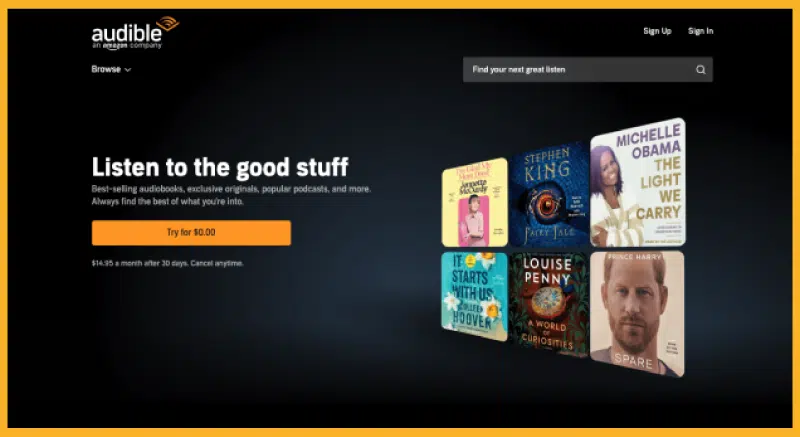
Synthetic voices have been proliferating for years, and the generative AI boom of the new ’20s has accelerated that process significantly. AI voices are everywhere—in podcasts, political campaigns, and chatbots that subtly replicate celebrity voices. Soon, they’ll be making their way into your audiobooks too. Audible, the Amazon-owned audiobook company, has announced a groundbreaking trial program that allows its narrators to create their own AI voice clones for reading works in its audiobook marketplace. This innovative move was unveiled through a post on ACX—Audiobook Creation Exchange—Audible’s platform that enables authors and publishers to transform written books into audiobooks.
“We’re taking measured steps to test new technologies to help expand our catalog,” the post stated. “This week we are inviting a small group of narrators to participate in a US-only beta enabling them to create and monetize replicas of their own voices using AI-generated speech technology.” Audible emphasized that both narrators and authors will have control over which projects their AI voices are utilized for. Additionally, all final narrations will undergo a review process as part of ACX’s production protocol to ensure there are no mispronunciations or other errors.
Despite this progressive announcement, it might seem somewhat contradictory to Audible’s current stance on narrated audiobooks. Even after this introduction, ACX’s submission requirements still mandate that audiobook narrations “must be narrated by a human.” However, Amazon has already shown a strong inclination towards integrating AI into its services. Last year, the company implemented a similar AI audio program for its Kindle Direct Publishing platform. Currently, the Audible AI voice cloning program is limited to a select group of narrators participating in the beta phase. Nevertheless, it’s easy to envision the program expanding in the future, potentially allowing any author capable of generating an AI voice to read their own books. Other companies are also entering this space; for instance, the startup Rebind is working with authors to clone their voices so that an AI version can “guide” readers through their texts.
The introduction of AI voice cloning in audiobooks presents both opportunities and challenges. On one hand, it can significantly expand Audible’s catalog by enabling narrators to produce more content efficiently. AI clones can help maintain consistency in narration, especially for long series or books requiring multiple narrators. Additionally, it can offer narrators more flexibility, allowing them to participate in projects even when they are unavailable for recording sessions.
On the other hand, this development raises important questions about authenticity and the future of human narrators. Audiobook enthusiasts often appreciate the unique qualities that individual narrators bring to their readings—their emotional nuances, pacing, and personal interpretation of the text. AI-generated voices, while increasingly sophisticated, may struggle to replicate these subtle human elements fully. There is also the concern of job displacement for professional narrators, as AI technology becomes more capable and widespread.
Moreover, the ethical implications of voice cloning cannot be overlooked. Ensuring that narrators have full control over their AI voices and how they are used is crucial to prevent misuse or unauthorized replication. Audible’s approach of allowing narrators and authors to decide which projects use AI voices and implementing a review process for final narrations is a step in the right direction. However, ongoing transparency and robust safeguards will be essential as the technology evolves.
The reaction from the audiobook community is mixed. While some authors and narrators are excited about the possibilities that AI voice cloning offers, others are more cautious, emphasizing the irreplaceable value of human narration. Listeners may also have varying preferences, with some embracing the convenience and consistency of AI voices, while others may prefer the unique touch that human narrators provide.
Amazon’s bold move with Audible’s AI voice cloning program signifies a broader trend in the publishing and entertainment industries, where artificial intelligence is increasingly integrated into creative processes. As AI technology continues to advance, its role in content creation will likely expand, offering new tools and capabilities for creators. However, striking the right balance between innovation and preserving the human element will be key to ensuring that AI serves as a complementary tool rather than a replacement.
For now, Audible’s pilot program remains a controlled experiment, testing the viability and reception of AI voice cloning in the audiobook market. The outcome of this trial could set the precedent for how AI is utilized in future audiobook productions and potentially reshape the landscape of audiobook narration. As the technology matures and becomes more accessible, it will be fascinating to observe how Audible and other companies navigate the opportunities and challenges that AI voice cloning presents.
In conclusion, Audible’s introduction of AI voice cloning for its narrators marks a significant milestone in the intersection of technology and storytelling. By empowering narrators to create and monetize their own AI voice replicas, Audible is exploring new frontiers in audiobook production. While the potential benefits are substantial, it is imperative to address the accompanying ethical and practical considerations to ensure that this innovation enhances rather than detracts from the audiobook experience. As the industry moves forward, the collaboration between human talent and AI technology will likely define the future of audiobooks, offering a blend of efficiency and personalization that could revolutionize how stories are told and experienced.

Your First 10 AI Skills
10 practical AI skills, copy-paste prompts and a 7-day plan to start using AI with confidence.
Download the guide →