

In a groundbreaking move that bridges consumer technology and healthcare, the U.S. Food and Drug Administration (FDA) has authorized software that transforms Apple’s latest AirPods Pro earbuds into clinical-grade hearing aids. This authorization marks a significant milestone in making hearing support more accessible and affordable for millions of Americans.
On Monday, Apple unveiled its redesigned AirPods lineup, introducing the AirPods Pro 2 equipped with a clinical-grade over-the-counter (OTC) hearing aid feature. This new functionality is complemented by a clinical hearing test accessible directly from users’ iPhones, streamlining the process of obtaining personalized hearing support. According to Apple, users can leverage their iPhones in tandem with the new AirPods Pro to create a personalized hearing profile. This seamless integration allows the earbuds to function as high-quality hearing aids, adjusting to individual hearing needs without the necessity of professional fitting.
The FDA’s announcement on Thursday confirmed that this is the agency’s first-ever marketing authorization for an OTC hearing aid software device integrated into a widely used consumer audio product. Michelle Tarver, acting director of the FDA’s Center for Devices and Radiological Health, emphasized the significance of this approval, stating, “Today’s marketing authorization of an over-the-counter hearing aid software on a widely used consumer audio product is another step that advances the availability, accessibility, and acceptability of hearing support for adults with perceived mild to moderate hearing loss.”
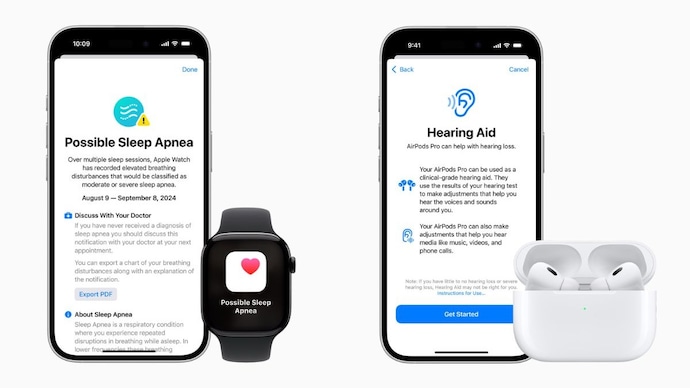
The hearing aid feature of the AirPods Pro is designed for adults aged 18 and older who experience mild to moderate hearing impairment. The device employs a “self-fitting strategy,” enabling users to adjust the earbuds to their specific hearing requirements without the need for professional assistance. This adjustment process is facilitated through the user’s iPhone or iPad, utilizing the operating system’s HealthKit application to access and tailor the hearing levels.
A clinical study involving 118 participants across the United States demonstrated that the self-fitting strategy yielded results comparable to those achieved through professional fittings. The FDA highlighted that the performance metrics, including amplification levels in the ear canal and speech understanding in noisy environments, were on par with traditional hearing aids. Importantly, no adverse events related to the device were reported during the study, underscoring its safety and reliability.
Hearing loss affects approximately 30 million adults in the United States, according to the FDA. This impairment can have profound effects on communication, relationships, work performance, and overall well-being. By integrating hearing aid capabilities into a popular consumer device like the AirPods Pro, Apple is making significant strides in addressing this widespread issue.
The AirPods Pro 2 are priced at $249 on Apple’s website and in its physical stores, making clinical-grade hearing support more affordable compared to traditional hearing aids, which can cost several thousand dollars. This pricing strategy, coupled with the ease of access provided by the OTC model, has the potential to revolutionize the hearing aid market by making essential support available to a broader audience.
Apple’s initiative sets a precedent for the convergence of consumer electronics and medical devices, potentially paving the way for more innovative health-related features in everyday technology. This collaboration between technology and healthcare not only enhances user experience but also promotes proactive health management.
The FDA’s authorization of Apple’s AirPods Pro as over-the-counter hearing aids represents a significant advancement in both technology and healthcare accessibility. By transforming a widely used consumer product into a clinical-grade hearing aid, Apple is addressing a critical need for millions of individuals with hearing impairments. This development not only underscores the potential of consumer technology in medical applications but also sets the stage for future innovations that prioritize both convenience and health.

Your First 10 AI Skills
10 practical AI skills, copy-paste prompts and a 7-day plan to start using AI with confidence.
Download the guide →