

Scientists have uncovered the mysterious process by which earthquakes transform quartz into large gold nuggets, shedding light on a phenomenon that has puzzled researchers for decades. This discovery, published in Nature Geoscience, reveals that the seismic activity not only brings gold-laden hydrothermal fluids into quartz veins but also generates an electric charge that causes the gold to cluster into valuable nuggets.
Gold is commonly found in quartz, a mineral that makes up a significant portion of Earth’s crust. However, the formation of exceptionally large gold nuggets, often nestled within quartz veins, has remained a mystery. These nuggets, which make up a significant portion of the world’s gold supply, are far from evenly distributed; instead, they form in concentrated clusters that defy simple geological explanations.
Chris Voisey, a geologist at Monash University in Australia and lead author of the study, explains that while gold naturally forms in quartz, the formation of large gold nuggets in specific locations has long been an enigma. Hydrothermal fluids, which carry gold atoms from deep within the Earth, should theoretically distribute the gold evenly within the quartz veins. Yet, these nuggets seem to defy this expectation, forming in concentrated areas.
Two key clues helped Voisey and his team crack the case. First, they noticed that the largest gold nuggets are typically found in orogenic gold deposits, which are created by seismic activity. Second, they focused on the fact that quartz is a piezoelectric mineral, meaning it generates an electric charge when subjected to stress, such as the intense pressure from an earthquake.
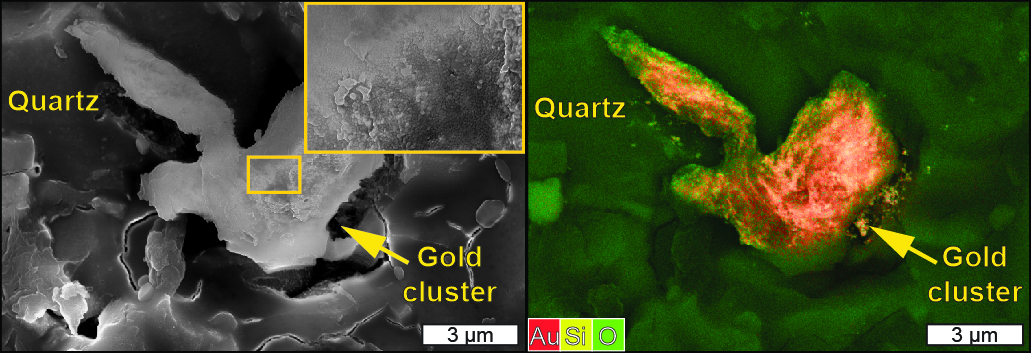
The researchers propose that during an earthquake, the stress on quartz veins generates an electric charge, which interacts with the gold in the hydrothermal fluids. This charge causes the gold to precipitate and solidify, leading to the formation of concentrated nuggets. The process is further amplified as gold tends to accumulate on pre-existing gold grains, making these grains act as electrodes that attract more gold from the surrounding fluids.
To test their hypothesis, the team conducted a laboratory experiment simulating the conditions of an earthquake on quartz crystals submerged in a gold-containing liquid. By generating seismic waves, they were able to produce a piezoelectric charge in the quartz, which in turn precipitated gold from the solution. This experiment confirmed that the electric charge generated by geologic stress is sufficient to cause gold to solidify into clusters, offering a plausible explanation for the formation of large gold nuggets.
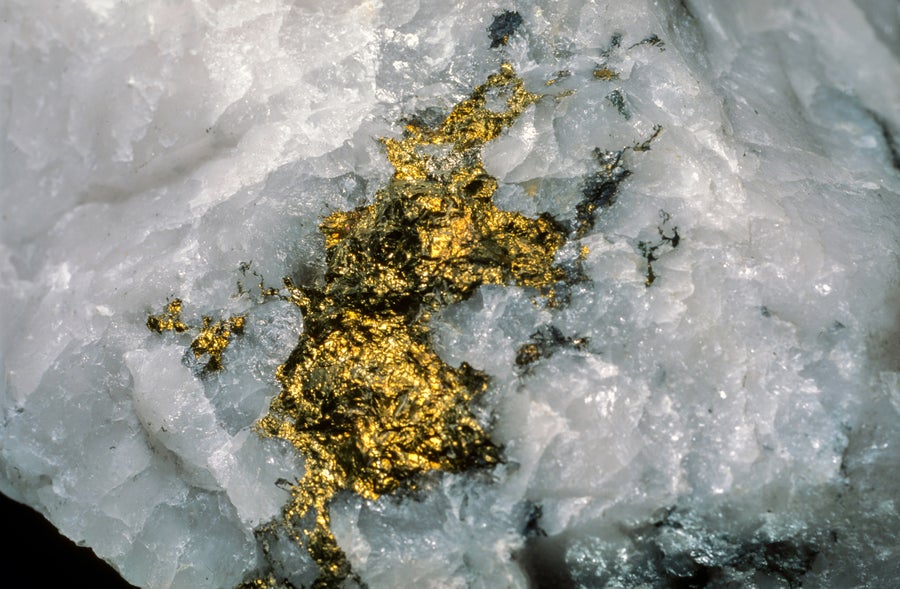
This groundbreaking research not only solves a long-standing geological mystery but also opens the door to potential applications. While it is now theoretically possible to create large gold nuggets in a lab by mimicking the natural process, Voisey cautions that this isn’t quite the alchemy of turning base metals into gold. The process still requires gold to be present in a solution before it can be concentrated into nuggets.
However, this discovery does not provide new tools for gold prospecting. The challenge remains in detecting which quartz veins contain gold, as current technology can only identify the presence of quartz, not the precious metal itself. The team’s findings may eventually lead to the development of devices that can detect the piezoelectric signals generated by quartz under stress, potentially offering clues to hidden gold deposits.
In summary, earthquakes play a crucial role in the formation of large gold nuggets by generating electrical charges in quartz veins, which then cause gold to cluster and solidify. This discovery not only deepens our understanding of geological processes but also highlights the complex interplay between natural forces that shape the Earth’s mineral wealth.