

In an alarming development, the Amazon basin is grappling with its worst drought on record, resulting in unprecedented declines in river water levels. This severe climatic event has led to the drying up of riverbeds that were once bustling, navigable waterways, fundamentally altering the landscape and threatening the delicate ecosystems that depend on these vital water sources. Among the affected waterways, the Solimões River—one of the main tributaries of the mighty Amazon River, originating in the Peruvian Andes—has plummeted to its lowest level ever recorded in Tabatinga, a Brazilian town situated on the border with Colombia.
The Amazon River, often referred to as the “lungs of the Earth,” plays a crucial role in regulating the global climate and supporting an immense biodiversity. The current drought, however, poses significant threats not only to the natural environment but also to the millions of people who rely on the river for their livelihoods. Historically, the Amazon’s vast network of rivers has been essential for transportation, fishing, and agriculture, underpinning the socio-economic fabric of countless communities. The drastic reduction in water levels disrupts these activities, leading to economic hardships and increased vulnerability among local populations.
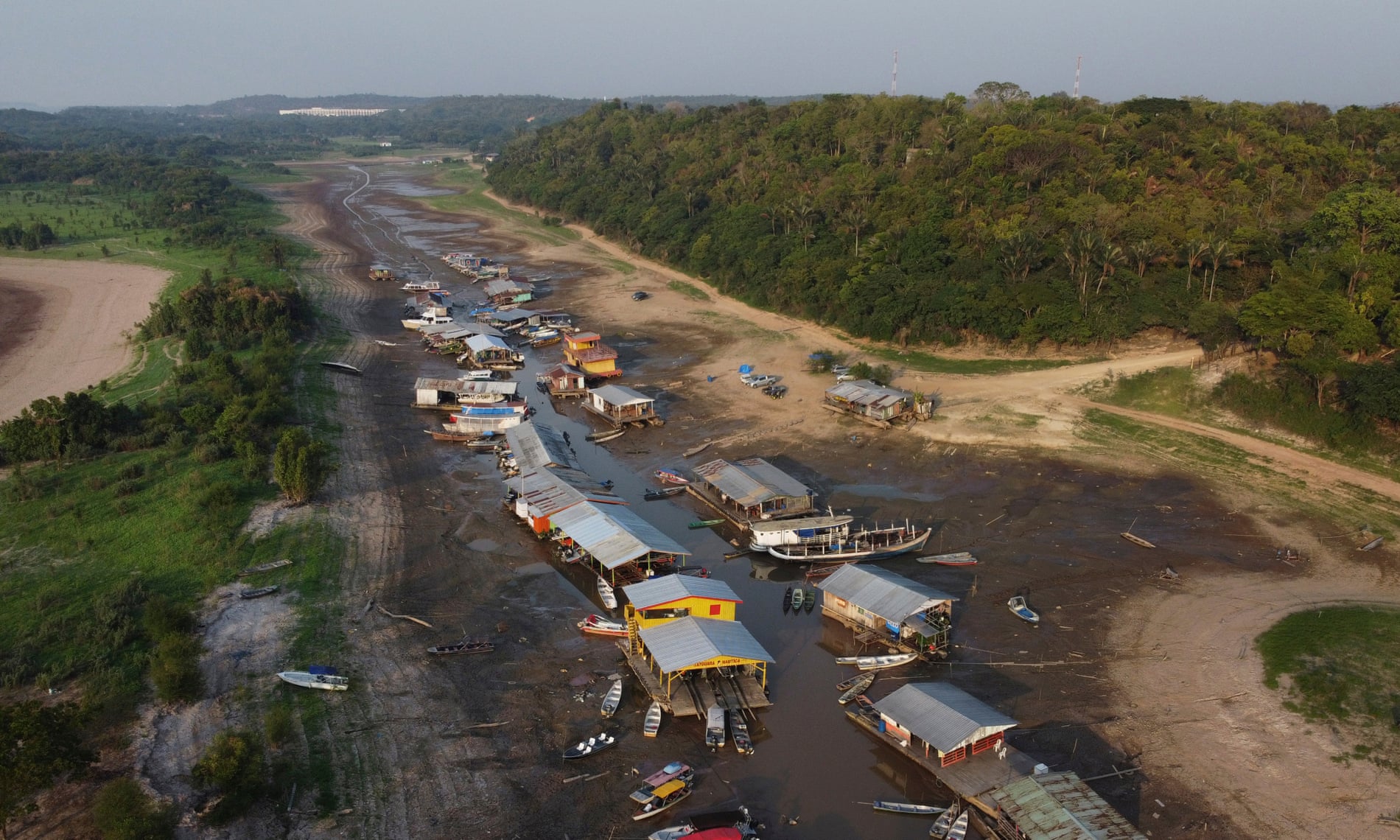
Climate change is the primary driver behind this unprecedented drought. Rising global temperatures have intensified the hydrological cycle, causing altered precipitation patterns and prolonged dry spells in regions that were once consistently wet. The Amazon basin, known for its heavy rainfall and lush rainforests, is particularly susceptible to these changes. The diminished water levels not only affect surface water availability but also have profound implications for groundwater replenishment and overall water security in the region.
The environmental consequences of the drought are equally dire. The Amazon rainforest, home to an estimated 390 billion individual trees and millions of species of flora and fauna, relies on the river systems to maintain their ecological balance. Reduced water flow can lead to habitat loss, decreased biodiversity, and increased susceptibility to wildfires, which further degrade the already fragile ecosystem. Aquatic life, including numerous fish species that are integral to the local food web, faces survival challenges as their habitats shrink and water quality deteriorates.
In Tabatinga, the Solimões River’s unprecedented low levels have had immediate and visible impacts. The drying riverbed has disrupted daily life, making it difficult for residents to access essential resources and services that depend on the river. Navigation, once a reliable means of transportation for people and goods, has become hazardous and unreliable. Fishing activities, a primary source of sustenance for many families, have been severely curtailed, threatening food security and economic stability in the region.
The broader implications of this drought extend beyond environmental and socio-economic spheres. International trade and regional connectivity are at risk as the Amazon’s waterways, which serve as vital trade routes, become impassable. This could lead to increased costs and delays in the movement of goods, affecting economies both within and outside the Amazon basin. Additionally, the psychological and cultural impact on indigenous communities, who have deep-rooted connections to the river systems, cannot be understated. The loss of navigable waterways erodes traditional practices and threatens the preservation of cultural heritage.
In response to the crisis, efforts are being made to mitigate the effects of the drought and adapt to the changing environmental conditions. Conservation initiatives aimed at protecting remaining water sources and restoring degraded habitats are gaining momentum. Sustainable water management practices are being implemented to ensure equitable distribution and usage of the scarce water resources. Moreover, there is a growing emphasis on combating climate change through international cooperation and local action, recognizing that long-term solutions require a concerted effort to reduce greenhouse gas emissions and enhance resilience against extreme weather events.
The situation also underscores the urgent need for comprehensive climate policies that address both mitigation and adaptation strategies. Investing in renewable energy, reforestation, and sustainable agriculture can help reduce the human footprint on the environment and build more resilient communities. Additionally, fostering scientific research and technological innovation is crucial for developing new tools and methodologies to monitor and respond to climatic changes effectively.
As the Amazon basin faces this unprecedented drought, the global community must rally to support the affected regions. International aid, coupled with robust policy frameworks, can provide the necessary resources and expertise to navigate this crisis. Public awareness and education about the importance of the Amazon and the impacts of climate change are essential in fostering a collective responsibility towards preserving this irreplaceable natural treasure.
In conclusion, the historic drought lowering the Amazon rivers to all-time lows is a stark reminder of the profound and far-reaching consequences of climate change. The drying up of the Solimões River in Tabatinga epitomizes the urgent need for immediate and sustained action to protect the Amazon basin’s ecosystems and the communities that depend on them. As the world watches the Amazon’s struggle, it becomes increasingly clear that safeguarding our planet’s most vital resources is not just a regional concern but a global imperative.