

MIT neuroscientists have made a groundbreaking discovery in the field of language processing by identifying distinct clusters of neurons in the brain that process language on different timescales. This discovery, made using a technique that records electrical activity directly from the brain, reveals that these neural populations, or “temporal windows,” range from processing individual words to interpreting more complex meanings over the span of several words.
The study, led by Evelina Fedorenko, an associate professor of neuroscience at MIT and a member of MIT’s McGovern Institute for Brain Research, marks the first time that researchers have observed clear heterogeneity within the brain’s language network. This finding challenges the previously held view, based on functional magnetic resonance imaging (fMRI), that language processing regions in the brain operate uniformly. Instead, the research shows that different neural populations are specialized to process varying amounts of linguistic context.
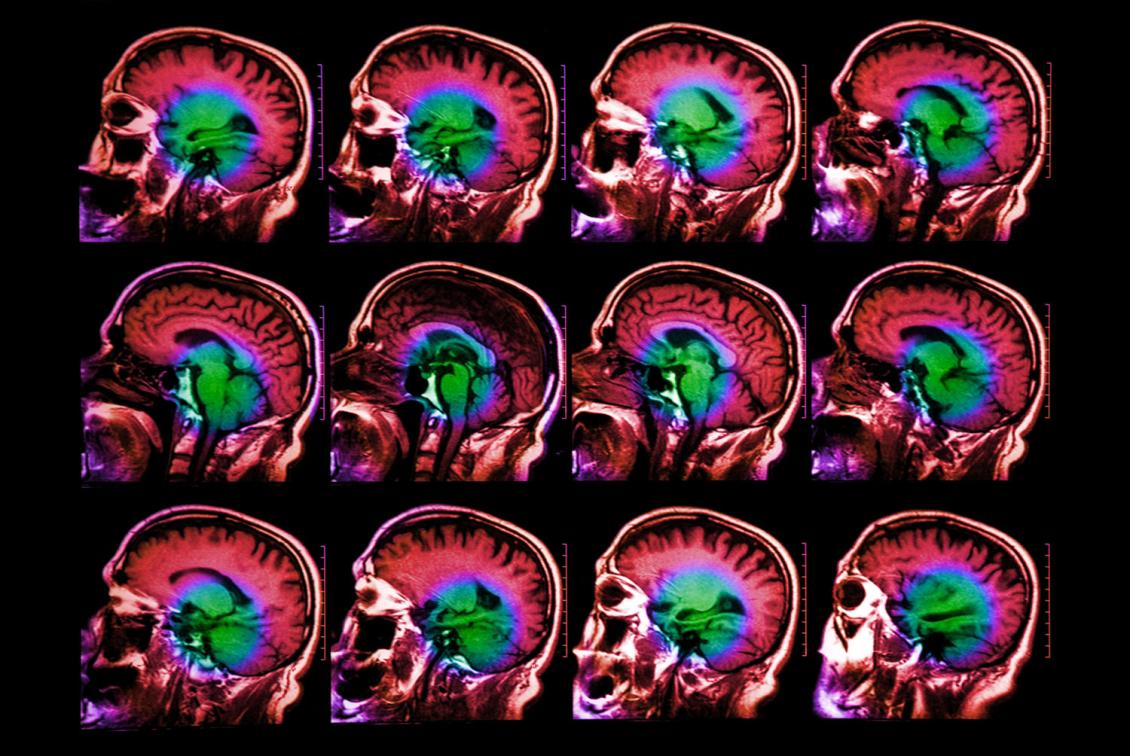
Functional MRI has long been a valuable tool for understanding brain activity, measuring changes in blood flow as a proxy for neural activity. However, its resolution is limited—each voxel in an fMRI image represents activity across hundreds of thousands to millions of neurons, summed over about two seconds. This broad-brush approach cannot reveal the fine-grained distinctions between small populations of neurons.
To overcome this limitation, the MIT team employed a more precise technique: recording electrical activity directly from the brains of patients undergoing surgery for severe epilepsy. This approach allowed the researchers to capture detailed neural activity as participants processed different types of language stimuli, including complete sentences, lists of words, nonsensical “jabberwocky” sentences, and lists of non-words.
The study’s findings showed that neural populations in language processing areas could be grouped into three distinct clusters based on their temporal response profiles. These clusters correspond to temporal windows of one, four, or six words. For example, neurons with shorter temporal windows might be involved in analyzing the meaning of individual words, while those with longer windows might be responsible for integrating the meanings of multiple words to interpret more complex linguistic structures.
“This is the first clear demonstration that there is structure within the language network,” Fedorenko explained. “The different neural populations are spatially interleaved, so we can’t see these distinctions with fMRI alone.”
The research, published in Nature Human Behavior, was co-authored by MIT postdoc Tamar Regev and Harvard University graduate student Colton Casto. Their analysis of data from 177 language-responsive electrodes, along with additional recordings from 362 electrodes in a second set of patients, provided robust evidence for the existence of these distinct neural clusters.
The implications of this discovery are profound, offering new insights into how the brain processes language. Understanding these temporal windows could lead to better models of language comprehension and more targeted interventions for language-related disorders. This research represents a significant step forward in the quest to unravel the complex neural mechanisms underlying one of the most fundamental aspects of human cognition.