

MIT researchers have reached a groundbreaking milestone with their latest robotic insect, a miniature marvel that sets new benchmarks in flight performance and design. This innovative creation boasts an unprecedented hovering capability of nearly 17 minutes—approximately 1,000 seconds—over 100 times longer than earlier models. Not only does it break flight duration records, but it also achieves an impressive average speed of 35 centimeters per second, making it the fastest insect-sized robot of its kind. Its agility is equally remarkable, as it can perform intricate aerial maneuvers such as double flips and body rolls, pushing the boundaries of what artificial micro-robots can achieve.
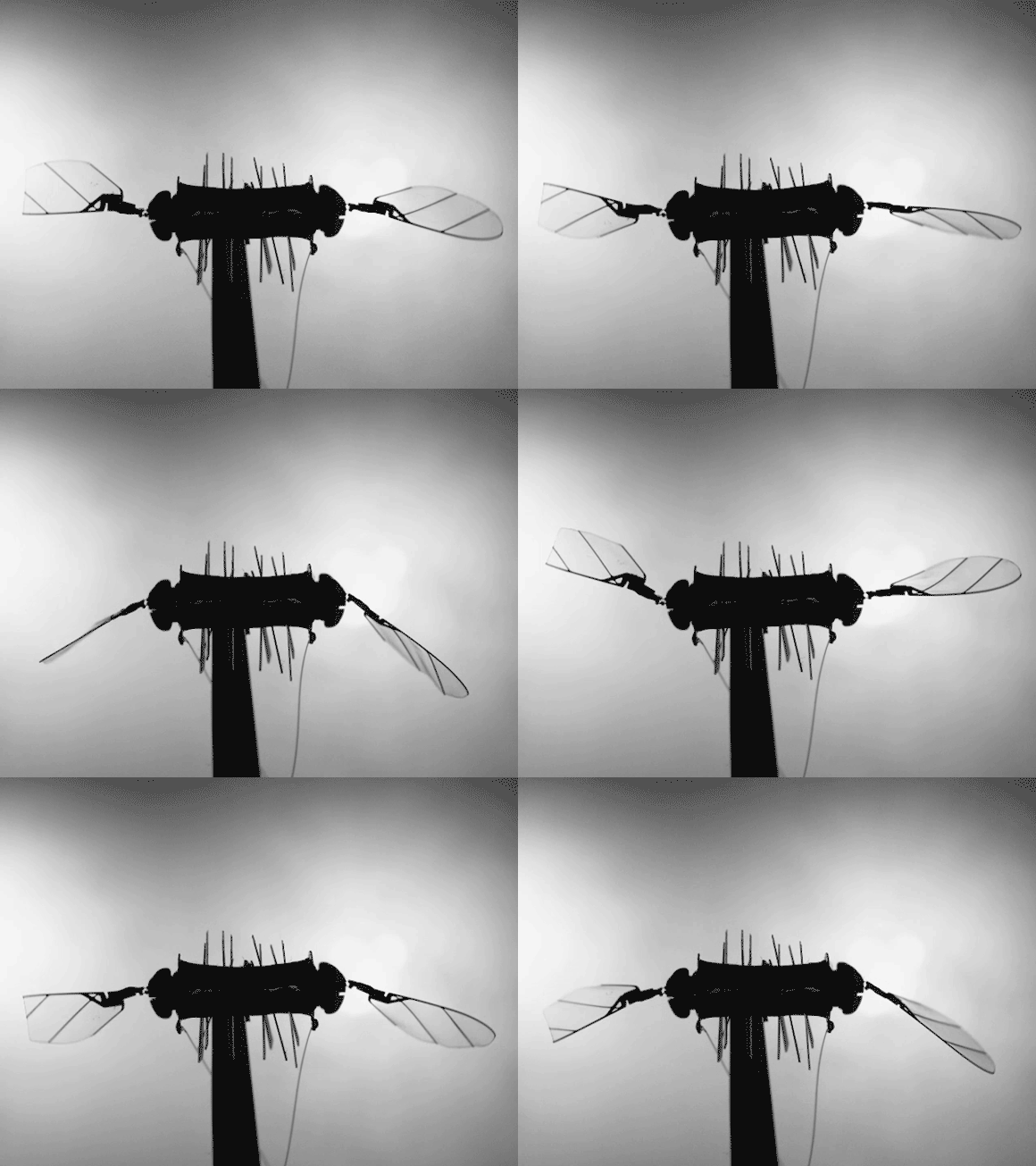
The secret behind this record-breaking performance lies in the insect’s advanced design features. The latest iteration is built with a streamlined structure composed of four identical units, each outfitted with a single outward-flapping wing. This unique configuration enhances wing stability, increases lift forces, and minimizes the interference that typically hampers multi-winged designs. By optimizing the aerodynamic profile, the robot attains both improved stability and efficiency, essential qualities for extended flight and precision maneuverability.
Key design innovations have been critical to this achievement. The robotic insect is constructed using ultra-lightweight materials, weighing less than a paper clip to minimize stress on its delicate wings. An improved transmission system featuring an elongated hinge design reduces mechanical stress and enhances the durability of the wings, while its compact structure creates additional space for potential electronic components, sensors, or batteries. Additionally, soft muscle actuators contribute to the robot’s refined agility and precision, allowing it to execute rapid and complex movements with remarkable control.
Credit: Courtesy of MIT researchers
These technological advancements bring the robotic insect closer to mimicking the capabilities of natural pollinators, opening exciting possibilities for its application in mechanical pollination. In controlled environments and indoor farming settings, such autonomous robotic pollinators could revolutionize agriculture by providing efficient, targeted pollination and reducing reliance on natural pollinator populations. The integration of this cutting-edge technology into modern farming practices not only promises enhanced crop yields but also presents a sustainable solution to the challenges posed by declining insect populations in nature.
MIT’s achievement in creating this agile, long-endurance robotic insect represents a significant step forward in both robotics and agricultural technology. As researchers continue to refine the design and explore practical applications, the potential for these tiny machines to transform controlled environment agriculture—and possibly even outdoor farming—remains immense. This breakthrough exemplifies how precision engineering and innovative design can converge to solve real-world challenges, heralding a future where advanced robotics seamlessly integrate into our daily lives and industries.