

In a historic breakthrough for quantum science, physicists at Aalto University in Finland have reported a record-setting coherence time for a transmon qubit, reaching the millisecond range—a substantial leap beyond the previous ceiling of 0.6 milliseconds. The advancement, announced on July 8, 2025, is a pivotal development in the global race toward fault-tolerant quantum computing.
Achieving longer coherence times is crucial because it allows quantum computers to perform more complex calculations without being disrupted by quantum noise and errors. The research team measured an echo coherence time with a maximum of one millisecond and a median of 0.5 milliseconds, both figures surpassing all prior scientific benchmarks. PhD student Mikko Tuokkola, who led the measurements, emphasized the significance of not only achieving the new maximum but also consistently outperforming prior results across multiple tests.
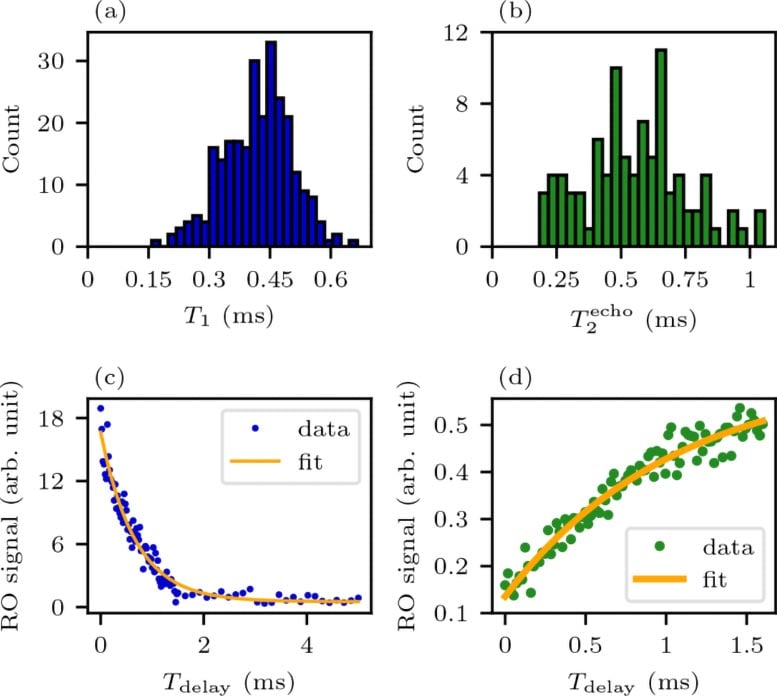
Under the guidance of Dr. Yoshiki Sunada—who designed the chip and built the measurement system—the team has made this advancement reproducible, opening the door for other research groups to build upon their methods. Sunada, now at Stanford University, praised the achievement as a demonstration of Finland’s growing prominence in quantum innovation.
The breakthrough was achieved using high-quality superconducting film from the Technical Research Centre of Finland (VTT), and the qubit was fabricated in the Micronova cleanrooms at OtaNano. These state-of-the-art facilities, part of Finland’s national research infrastructure, highlight the country’s commitment to advancing next-generation technology. The success further establishes the Quantum Computing and Devices (QCD) research group and the Finnish Quantum Flagship as global leaders in the field.
According to Professor Mikko Möttönen, head of the QCD group, the milestone marks a critical step in scaling up quantum machines of the future. While challenges like noise reduction and increasing qubit count remain, this improvement in coherence time directly addresses one of the field’s most urgent bottlenecks.
The QCD group is now expanding its efforts, opening positions for a senior staff member and two postdocs to accelerate their research. As quantum computing pushes forward, this landmark accomplishment not only elevates Finland’s role on the global stage but also inches the world closer to practical and powerful quantum systems.

Your First 10 AI Skills
10 practical AI skills, copy-paste prompts and a 7-day plan to start using AI with confidence.
Download the guide →