

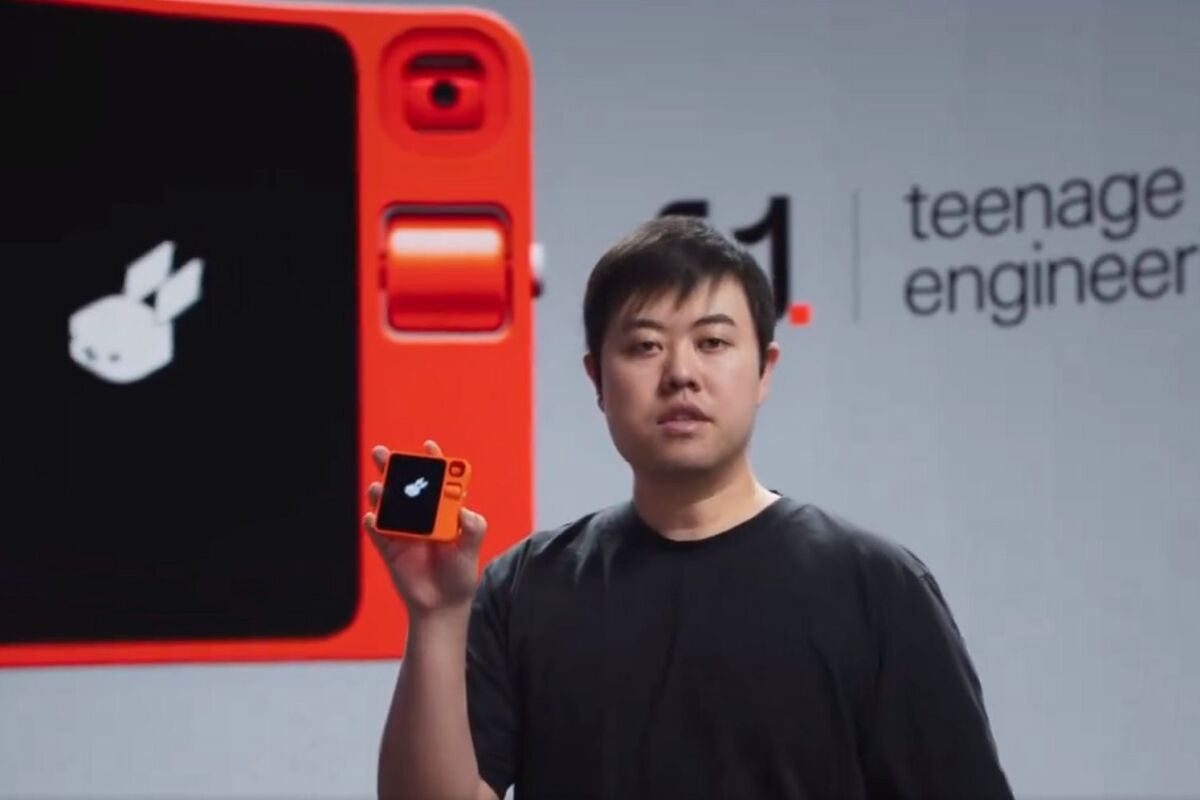
Rabbit Technologies is set to revive its flagship gadget, the Rabbit r1, with the imminent release of its highly anticipated web-based ‘Large Action Model’ (LAM) agent. After eighteen months of delays and unmet promises, CEO Jesse Lyu has acknowledged that “on day one, we set our expectations too high.” However, he remains optimistic as the company prepares to unleash the LAM on the r1 device with an update scheduled for this month.
The Rabbit r1, once hailed as the must-have gadget of early 2024, quickly lost its luster when the extensive promises made by Rabbit failed to come to fruition. The company has faced significant challenges, including multiple over-the-air updates—16 in total—that primarily focused on shipping, bug fixes, improving response times, and adding minor features. Despite these efforts, the r1 remained fundamentally limited to interacting with a large language model (LLM) or accessing one of seven specific services, such as Uber and Spotify. This limitation has left many users and industry observers questioning the viability of Rabbit’s ambitious goals.
During a recent conversation with TechCrunch, Jesse Lyu admitted that the initial version of the LAM was not as generic as promised. “That was the first-ever version of the LAM, trained on recordings collected from data laborers, but it isn’t generic — it only connects to those services,” Lyu explained. The early iteration of the LAM did not deliver the broad capabilities Rabbit had advertised, leading to disappointment among early adopters and critics alike.
Despite these setbacks, Rabbit is poised to release the first truly generic version of the LAM. This web-based agent is designed to perform a wide range of ordinary tasks across various websites without being tied to specific applications or interfaces. Lyu demonstrated the updated LAM, showcasing its ability to break down tasks into actionable steps and execute them by analyzing on-screen elements like buttons, fields, and images, regardless of their position or appearance.
For example, when tasked with registering a new website for a film festival, the LAM successfully navigated to a domain registry, selected an appropriate domain, and completed the registration process autonomously. Similarly, when instructed to purchase an r1 device, the agent efficiently located and selected the desired product on eBay before adjusting its strategy to purchase directly from the official website upon additional prompting. The agent also demonstrated its ability to engage with online games, albeit requiring some prompt engineering to navigate game-specific challenges.
The new LAM operates using a fresh, clean browser instance in the cloud, although Rabbit is developing local versions, such as a Chrome extension, to allow integration with existing user sessions. This development is crucial for enhancing user privacy and convenience, as it would eliminate the need to log into services repeatedly. However, users remain cautious about granting third-party agents full access to their credentials. Lyu suggested that future iterations might include a secure, walled-off small language model that can privately handle logins, although the exact implementation remains uncertain.
Rabbit’s vision extends beyond the current web-based agent. The company is also working on a desktop agent capable of interacting with a variety of applications, including word processors and music players. This agent aims to control interfaces across different operating systems, further emphasizing Rabbit’s goal of creating a cross-platform, generic agent system.

Despite the impressive demonstrations, Rabbit faces skepticism regarding the practical utility of its agent. Critics argue that while technically feasible, the LAM’s reliance on prompt engineering makes it less user-friendly for ordinary consumers. Additionally, the absence of a “killer app” means that the agent’s real-world applications are not yet compelling enough to drive widespread adoption.
Lyu acknowledged these concerns, emphasizing that the current version is a “playground version” and not yet final. He highlighted ongoing improvements, such as the model’s ability to plan tasks more effectively and the introduction of a “teach mode” to allow users to train the agent on specific tasks. Nevertheless, challenges remain, including the agent’s inability to learn user preferences or skip unnecessary steps autonomously.
Rabbit
Another hurdle for Rabbit is addressing user privacy without compromising the agent’s functionality. While the company has assured that it does not currently harvest user data to improve the model, future developments will need to balance personalization with robust privacy protections to gain user trust.
In conclusion, Rabbit’s impending release of the web-based LAM agent on the r1 device marks a pivotal moment for the company. Despite past missteps and ongoing challenges, the updated LAM represents a significant step towards realizing Rabbit’s original vision of a versatile, platform-agnostic agent. As the update rolls out this week, users will have the opportunity to experience the enhanced capabilities firsthand. Whether Rabbit can overcome its initial setbacks and deliver on its promises remains to be seen, but the arrival of the LAM agent offers a glimmer of hope for the beleaguered company.

Your First 10 AI Skills
10 practical AI skills, copy-paste prompts and a 7-day plan to start using AI with confidence.
Download the guide →