

Researchers have made significant strides in developing a humanoid robot with a lifelike smiling face made from living human skin cells. This breakthrough could allow machines to emote and communicate more naturally and could have surprising applications in the cosmetics industry.
The innovative living tissue is a blend of human skin cells cultured within a collagen scaffold, which is then applied to a 3D-printed resin base. Unlike previous experiments, this skin incorporates structures analogous to ligaments in humans and other animals. These ligament equivalents, referred to as “perforation-type anchors” by Michio Kawai and his team at Harvard University, were created by perforating the robot’s resin base. The perforations filled with living tissue, which helps secure the skin in place, providing strength and flexibility.
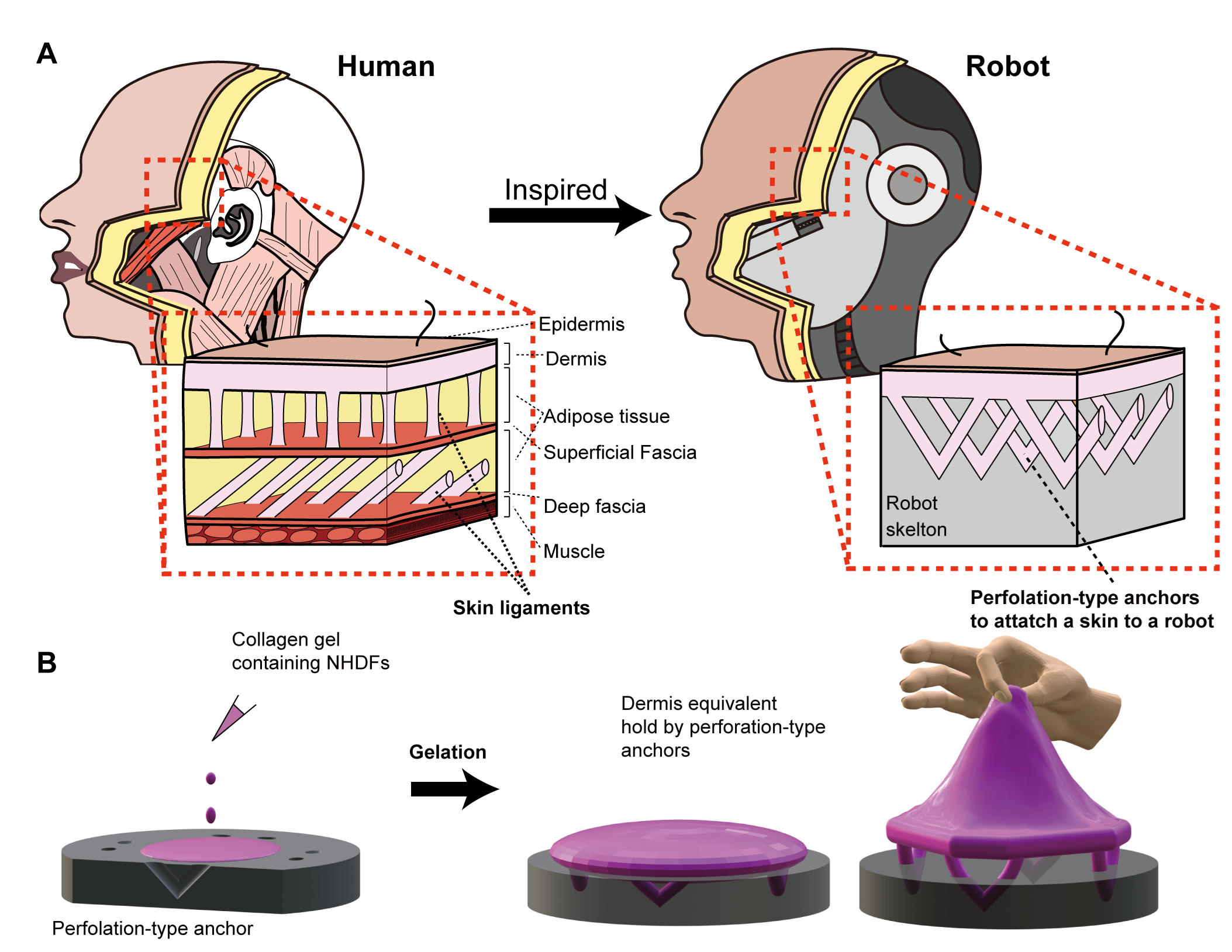
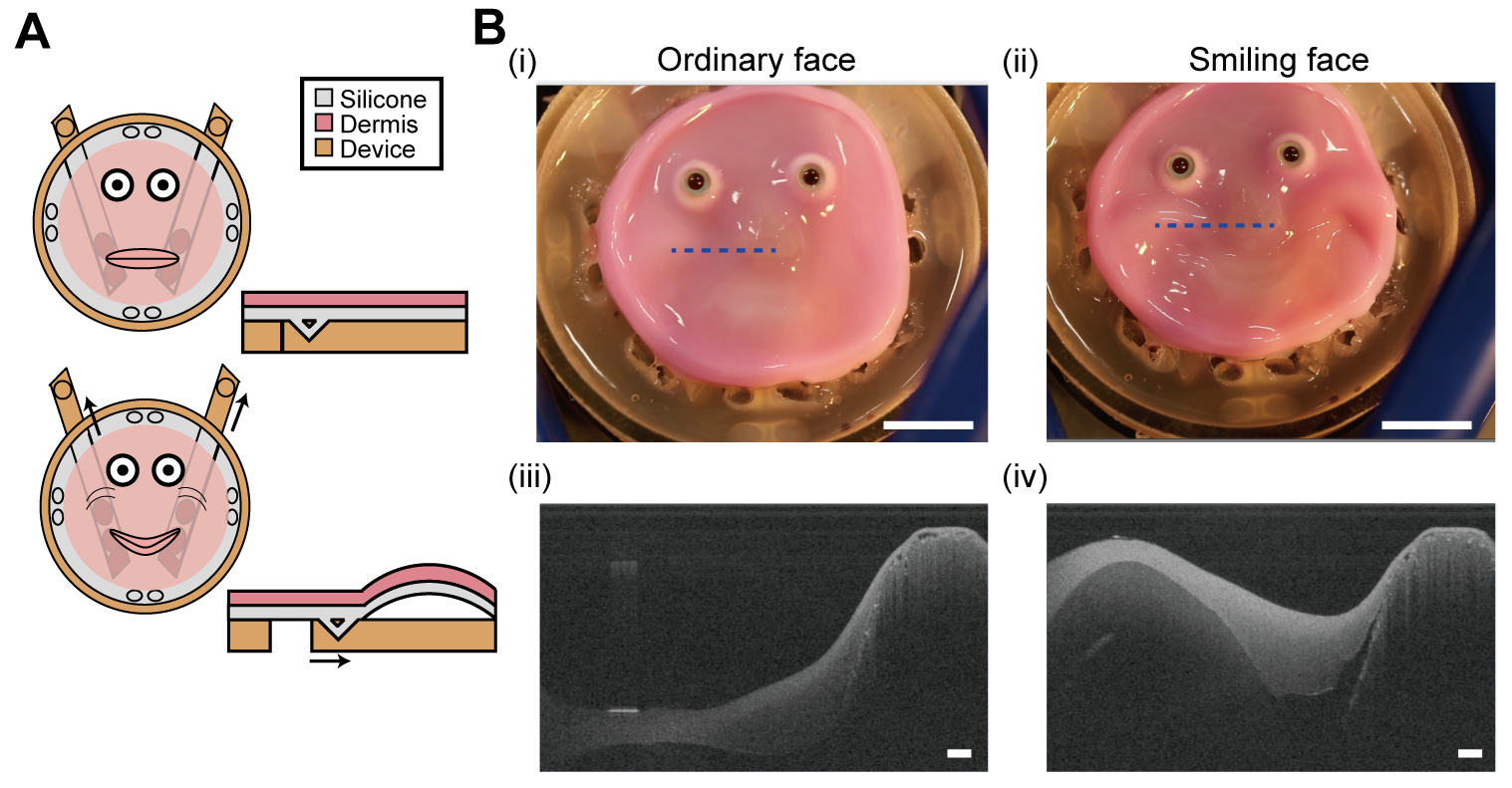
The team applied this skin to a small robotic face capable of smiling, which was a few centimeters wide and moved by rods connected to the base. They also attached the skin to a static 3D model of a human head. Kawai highlighted that as AI technology advances and robots take on more roles, the need for more functional and human-like robot skin grows. This development could enhance how robots communicate with people, making interactions more natural and intuitive.
Beyond robotics, this research has potential implications for the cosmetics industry. In their experiments, the researchers made the small robot face smile for a month, successfully replicating the formation of expression wrinkles in the skin. “Being able to recreate wrinkle formation on a palm-sized laboratory chip can simultaneously be used to test new cosmetics and skincare products that aim to prevent, delay, or improve wrinkle formation,” Kawai explained. This aspect of the research was carried out while Kawai was at the University of Tokyo.
However, the current iteration of the skin still lacks some essential functions and durability compared to real human skin. “The lack of sensing functions and the absence of blood vessels to supply nutrients and moisture means it cannot survive long in the air,” Kawai noted. Addressing these challenges, the researchers are now focusing on incorporating neural mechanisms and perfusion channels into the skin tissue to improve its viability and functionality.
This advancement in robotic skin marks a significant step toward creating more lifelike humanoid robots and offers exciting possibilities for both technology and skincare industries. As researchers continue to refine this technology, the future may see robots that not only look more human but also play a vital role in testing and developing new skincare products.