

Key Takeaways
- The metasurface lenticular lens (MLL) is just 1.2mm thick, far slimmer than conventional 3D display lenses.
- It delivers a 100 degree field of view, over six times wider than the roughly 15 degrees of current glasses free 3D tech.
- Voltage controlled polarization allows the display to switch between 2D and 3D modes without losing image quality.
- The team demonstrated a 25 cm² (50x50mm) MLL integrated directly into an OLED panel.
- Researchers say the technology is feasible for mass production.
- Potential applications include smartphones, tablets, VR and AR headsets, and medical imaging.
- The research was published in Nature on April 23, 2026.
A joint research team from Samsung Electronics and POSTECH (Pohang University of Science and Technology) has introduced a new kind of display lens that could finally make glasses free 3D practical for everyday devices. The ultrathin metasurface lenticular lens, or MLL, enables screens to switch seamlessly between conventional 2D and immersive 3D modes, and was detailed in a paper published in the journal Nature on April 23, 2026.
The breakthrough tackles two of the biggest obstacles that have held back glasses free 3D adoption for years. Existing lenticular 3D solutions tend to be bulky, and they typically offer a narrow viewing angle that forces users to sit in a very specific spot to see the effect properly. The new metalens design addresses both issues at once.
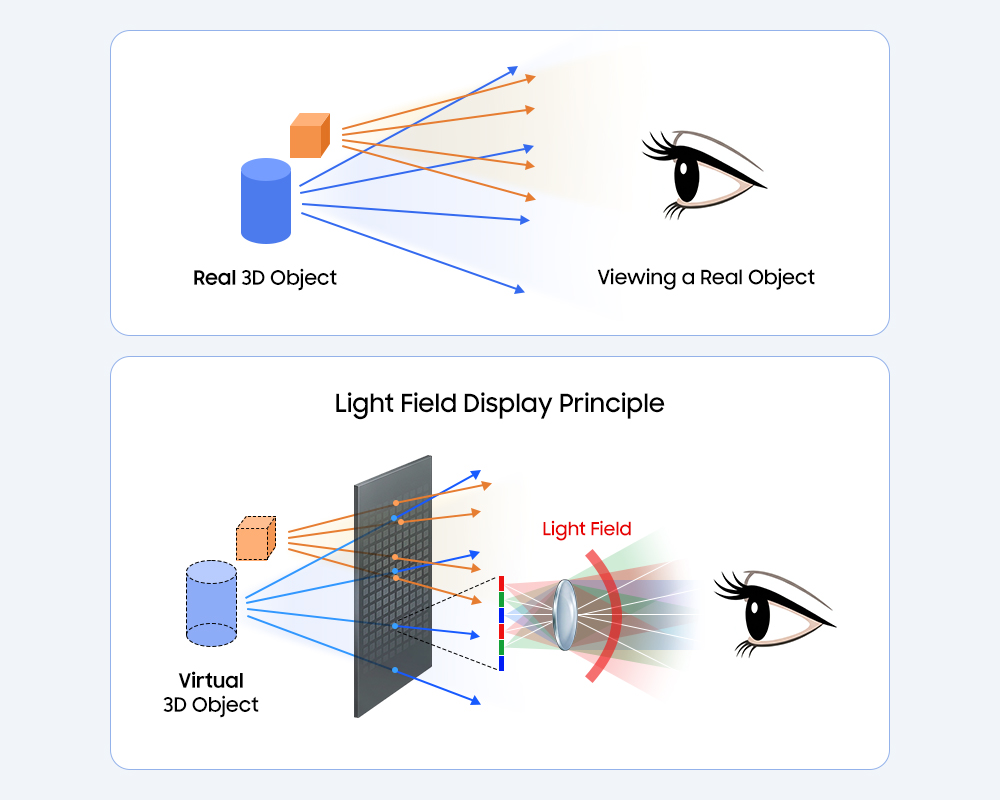
At just 1.2mm thick, the MLL is dramatically slimmer than traditional glass lenses used for 3D displays, making it thin enough to be applied as a single layer on mobile devices. It also delivers a 100 degree field of view, which is more than six times wider than the roughly 15 degree range typical of current glasses free 3D technology. That expanded angle means multiple viewers can enjoy the 3D effect without carefully positioning themselves in front of the screen.
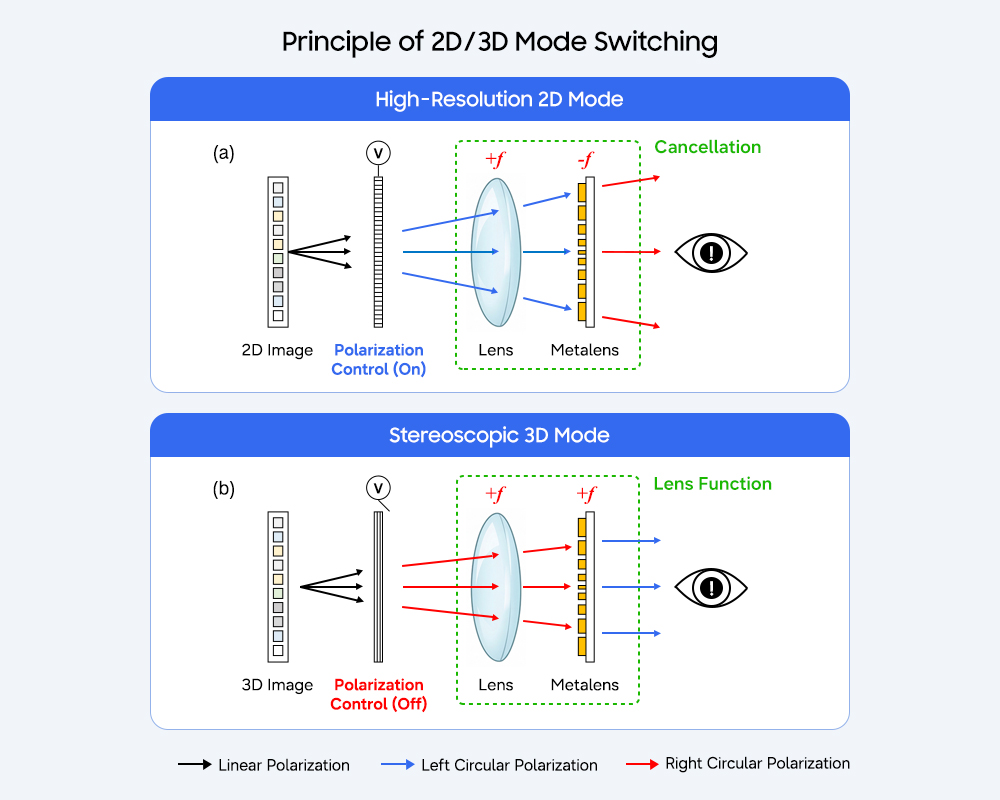
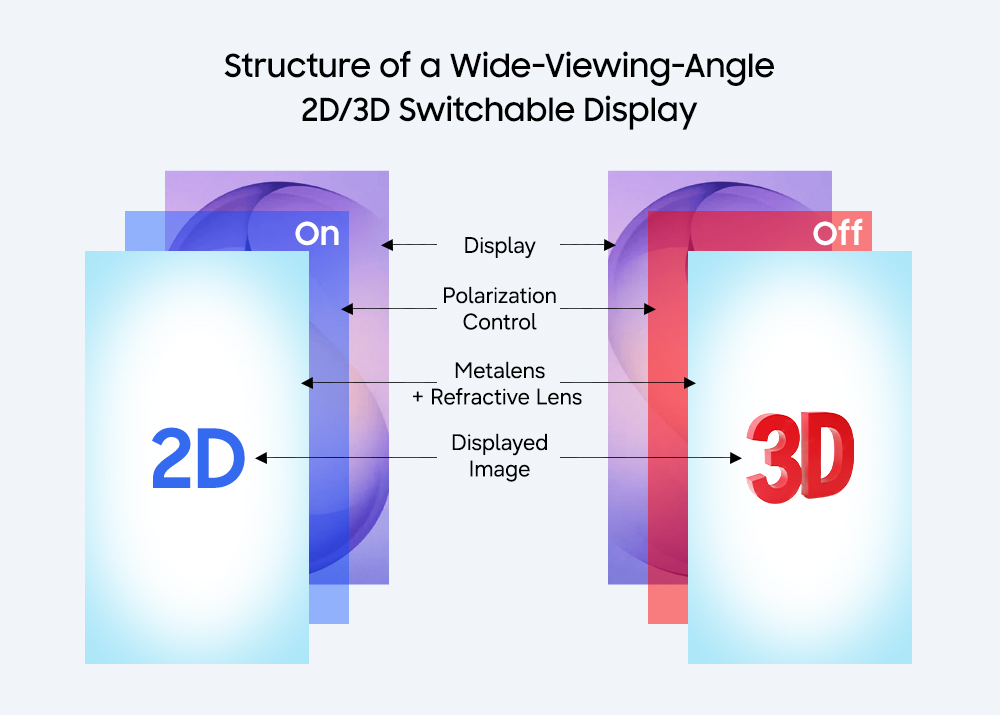
The technology works by using nanoscale structures etched onto a flat substrate to directly manipulate the properties of light. By applying voltage to control light polarization, the display can toggle between a high resolution 2D mode and an immersive 3D mode with no loss of image quality. This switchable functionality is a key differentiator from existing 3D products like certain “Spatial Signage” installations or Samsung’s Odyssey 3D gaming monitor, both of which rely on thicker lenticular lenses combined with eye tracking.
Crucially, the researchers also demonstrated scalability. The team successfully integrated a 25 cm² (50x50mm) MLL into an OLED panel, a size that suggests real commercial viability for smartphones and tablets rather than just laboratory demonstrations. Samsung and POSTECH indicate the technology is technically feasible for mass production, which opens the door to widespread adoption in consumer hardware.
The potential applications reach well beyond phones. In mobile devices, users could enjoy togglable 2D and 3D screens depending on content. In VR and AR, the lens could enable thinner, lighter headsets with sharper immersive visuals. And in medical imaging, the technology could deliver high precision 3D visualization for clinical settings, where accurate depth perception can make a meaningful difference for diagnostics and surgery planning.
If the team’s claims about mass production hold up, this could finally be the moment glasses free 3D moves from niche experiment to a standard feature on the screens we already use every day.

Your First 10 AI Skills
10 practical AI skills, copy-paste prompts and a 7-day plan to start using AI with confidence.
Download the guide →