

In a bold and controversial experiment, a team of physicists has explored the possibility of generating electricity by tapping into the Earth’s rotational energy. Led by Princeton University physicist Christopher Chyba, the researchers designed a device that, when aligned at a specific angle to the Earth’s rotation and magnetic field, produced a tiny but measurable amount of electricity. While the results are far from practical application, they open the door to a novel approach to renewable energy—one that could theoretically power the planet without significantly impacting the Earth’s rotation.
The Science Behind the Experiment
The device, described in a paper published in Physical Review Research, consists of a weak manganese-zinc ferrite conductor with electrodes at each end. The team aligned the device at a 57-degree angle, making it perpendicular to the Earth’s rotational motion and its magnetic field. This alignment allowed the device to generate 17 microvolts of electricity—a minuscule amount, equivalent to a fraction of the voltage released by a single neuron firing in the human brain.
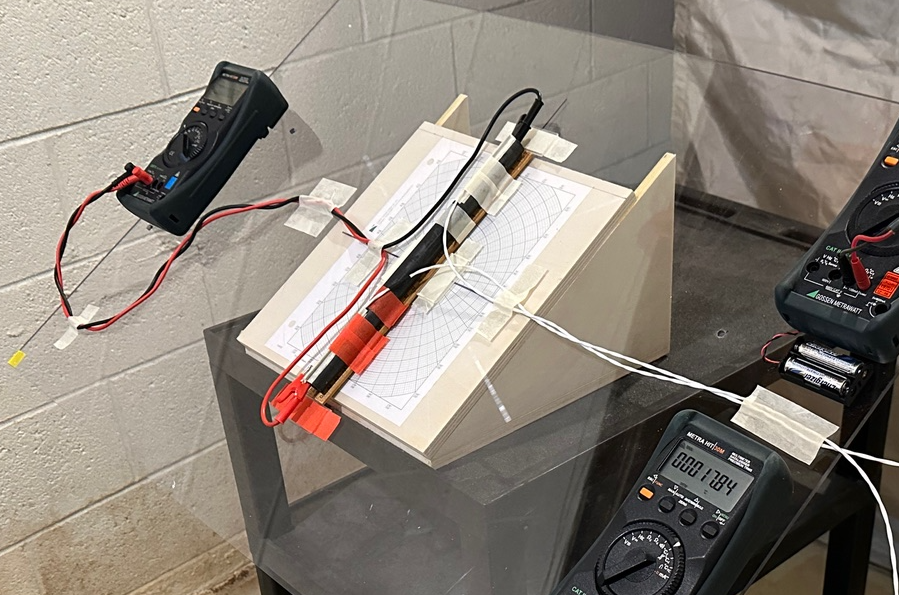
The concept is rooted in the idea that the Earth’s magnetic field, parts of which remain static, could induce a current as the generator moves through it. However, this effect is extremely difficult to isolate from other physical influences, making the results both intriguing and contentious.
Skepticism and Challenges
While the experiment has sparked excitement, it has also drawn skepticism from the scientific community. Retired physicist Rinke Wijngaarden, who conducted similar experiments in 2018 without success, remains unconvinced. “I’m still convinced that the theory of Chyba et al. cannot be correct,” he told Nature.
One of the key challenges is the potential for electrons to rearrange themselves within the device, creating an opposing force that negates the generated current. Chyba and his team claim to have addressed this issue by using a special material that maintains a consistent electrostatic force, preventing such rearrangements. However, further research is needed to validate these claims and refine the technology.
The team’s next goal is to scale up the experiment to generate a meaningful amount of electricity. While the current output is negligible, the researchers believe that with advancements in materials and design, the technology could eventually contribute to global energy needs.
Interestingly, even if the system were scaled up to meet the entire planet’s energy demands, the impact on the Earth’s rotation would be minimal. According to the researchers, the Earth’s spin would slow by just seven milliseconds over the next 100 years—a change comparable to the natural slowing caused by the Moon’s gravitational pull.
A Controversial but Promising Path
The idea of harnessing the Earth’s rotation for energy is not new, but it has remained largely theoretical until now. The experiment by Chyba and his team represents a significant step forward, even if the practical applications remain distant.
As with any groundbreaking discovery, skepticism is inevitable. However, the potential rewards are immense. If successful, this technology could provide a virtually limitless source of renewable energy, reducing our reliance on fossil fuels and mitigating the impacts of climate change.
What’s Next?
The team plans to continue refining their device and exploring ways to increase its efficiency. While the road ahead is long and fraught with challenges, the experiment serves as a reminder of the importance of pushing the boundaries of scientific inquiry.
For now, the concept remains a fascinating glimpse into the future of energy production—one that could one day transform the way we power our world.