

Key Takeaways
- The University of Sydney achieved 27.06% efficiency in a 1 cm² triple-junction perovskite-perovskite-silicon solar cell — and 23.3% on a large 16 cm² device.
- The Sydney design passed IEC thermal cycling tests, retaining 95% efficiency after 400+ hours and 200 temperature cycles.
- Korean researchers from UNIST and Korea University developed a 4CP additive that tripled perovskite solar cell lifespan, maintaining 80% efficiency after 3,000 hours.
- Fujian Normal University and the University of Surrey set a new record for antimony trisulfide (Sb₂S₃) cells with 9.0% efficiency and strong environmental stability.
- Kaunas University of Technology achieved 21% efficiency with fully inorganic perovskite cells that remained stable at 85°C for 950+ hours.
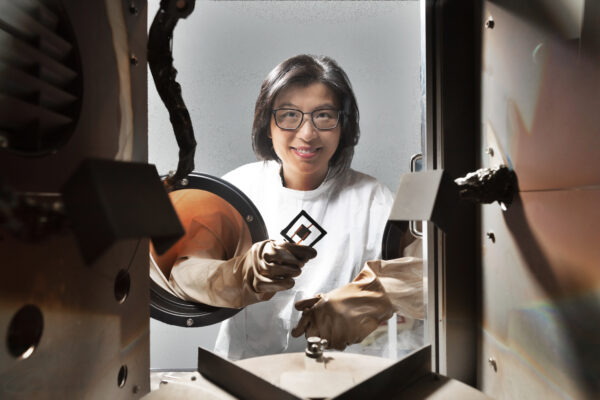
Solar technology has entered a new era as international research teams break through efficiency and stability barriers once thought insurmountable. At the University of Sydney, scientists led by Professor Anita Ho-Baillie developed a triple-junction perovskite-perovskite-silicon tandem solar cell that hit a remarkable 27.06% efficiency on a small-scale device — and an impressive 23.3% efficiency on a large 16 cm² cell verified by independent testing. The innovation replaces unstable components with rubidium and piperazinium dichloride, significantly improving long-term durability.
Beyond raw power output, the Sydney team’s cell became the first globally to pass the International Electrotechnical Commission (IEC) thermal cycling test, retaining 95% efficiency after 400 hours of light exposure and 200 temperature cycles ranging from -40°C to 85°C. This achievement signals a critical step toward commercial-ready perovskite technologies capable of meeting industrial reliability standards.
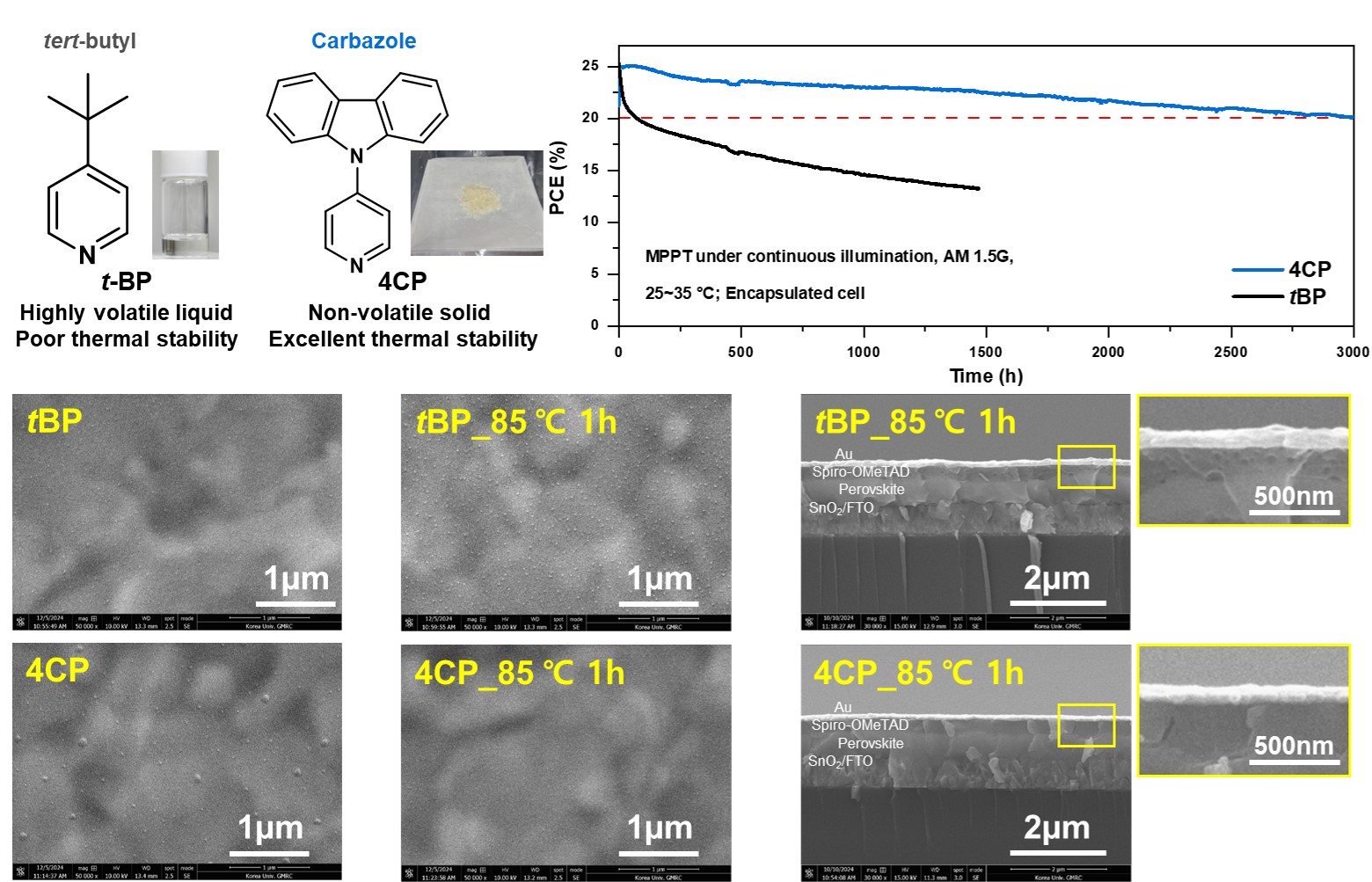
Meanwhile, in South Korea, a team from UNIST and Korea University engineered a revolutionary solid-state additive called 4-(N-carbazolyl)pyridine (4CP) that replaces traditional liquid electrolytes responsible for rapid degradation in perovskite cells. Their innovation not only achieved 26.2% efficiency (25.8% certified) but also tripled operational lifespan, with cells maintaining 80% of peak performance after 3,000 hours and 90% retention after 200 thermal shocks. This balance of power and resilience directly addresses one of the biggest challenges in bringing perovskite cells to market.
Further east, Chinese scientists from Fujian Normal University and the University of Surrey reported a record 9.0% efficiency for antimony trisulfide (Sb₂S₃) solar cells using a novel In Situ Ozone Treatment technique. This process forms an oxygen-sulfur gradient that improves charge transport and longevity, allowing the cells to maintain 70% efficiency after 1,000 hours of extreme damp-heat exposure — all without encapsulation.
Adding to the global progress, Kaunas University of Technology achieved over 21% efficiency in fully inorganic perovskite cells that ran stably for more than 950 hours at 85°C under constant illumination. Even when scaled up 300 times to mini-modules, the cells preserved nearly 20% efficiency, showcasing scalability for real-world production.
Together, these breakthroughs signify a major inflection point in solar innovation. By uniting unprecedented power conversion efficiency with commercial-grade stability, the new generation of solar cells positions renewable energy to surpass traditional silicon technology and power a more sustainable, electrified future.

Your First 10 AI Skills
10 practical AI skills, copy-paste prompts and a 7-day plan to start using AI with confidence.
Download the guide →