

The Artemis Orion spacecraft, after its pioneering uncrewed journey around the moon during the Artemis 1 mission in November 2022, is now facing the gauntlet of rigorous testing to ensure it’s ready for its next monumental task: carrying humans back to lunar orbit.
Artemis 1 saw Orion travel an unprecedented 1.4 million miles, circling the moon and returning to Earth, showcasing the spacecraft’s capabilities for future crewed missions. However, before astronauts can board for Artemis 2, set to launch in April 2026, the Orion Environmental Test Article (ETA) must pass through a series of extreme tests at NASA’s Neil Armstrong Test Facility in Ohio.
The ETA has undergone an 11-month test campaign, simulating conditions like those of a launch abort scenario. “This event would be the maximum stress and highest load that any of the systems would see,” explained Robert Overy, Orion ETA project manager. These tests are vital to ensure that in case of an emergency, Orion can safely separate from the Space Launch System (SLS) rocket, protecting any crew inside.
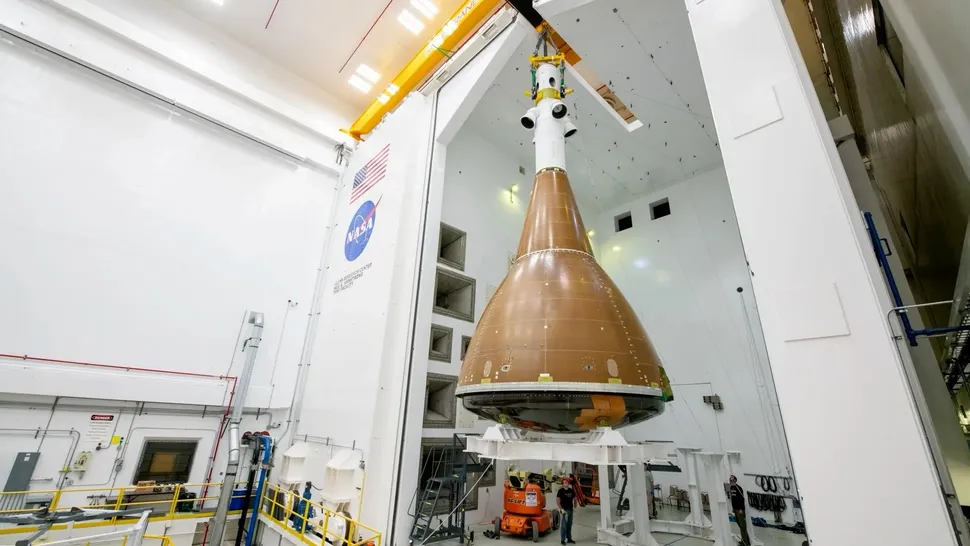
Among the tests, one particularly dramatic was the forward bay cover jettison, captured in slow-motion video, showcasing the deployment of critical systems for safe re-entry, including parachutes and splashdown airbags. This test, completed on November 23, 2024, is crucial for the spacecraft’s ability to land safely in water.
Additional tests included simulating electromagnetic effects, ensuring Orion’s systems are shielded against potential lightning strikes during launch preparations. “It’s been a successful test campaign,” Overy noted, highlighting that the tests not only matched predictions but also confirmed the vehicle’s resilience under extreme conditions.
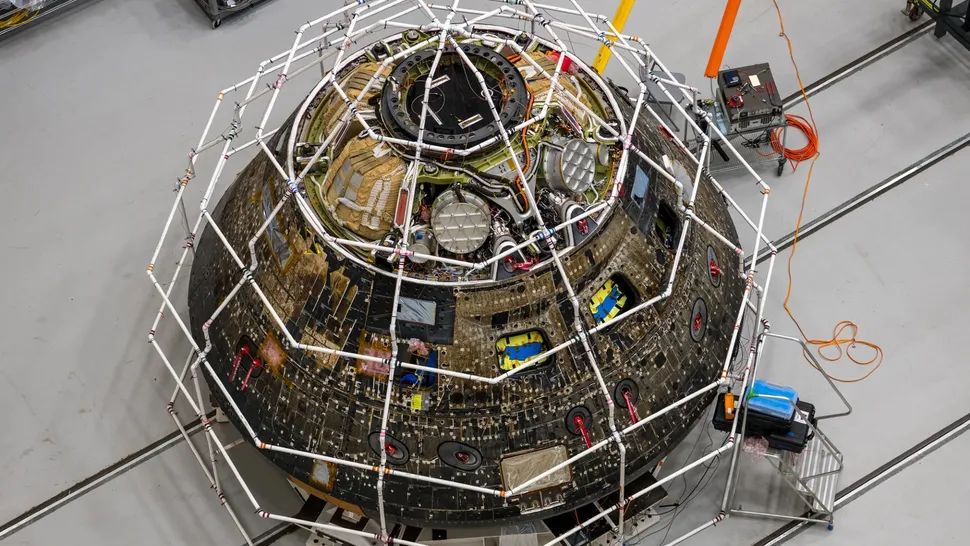
Another significant test was the docking mechanism jettison on November 11, 2024, which involved practicing the connection and disconnection with the Lunar Gateway, a future space station orbiting the moon. This is essential for future missions where Orion will dock with the Gateway before descending to the lunar surface.
Michael See, ETA vehicle manager for the Orion Program, emphasized the critical nature of these tests: “These tests are absolutely critical because we have to complete all of these tests to say the spacecraft design is safe and we’re ready to fly a crew for the first time on Artemis 2.”
The Artemis program is not just about revisiting the moon but doing so with a vision for sustainable lunar exploration. Artemis 2 will serve as the first crewed demonstration of the Orion-SLS system, with a plan to loop around the moon for about 10 days before returning. This mission paves the way for Artemis 3, which aims to land humans on the moon again, fulfilling a long-held goal since the last Apollo mission over five decades ago.
With each test completed, NASA moves closer to ensuring that the Orion spacecraft can safely and efficiently transport astronauts, marking a new chapter in human space exploration.