

Key Takeaways
- The WMO officially endorsed AI for weather and disaster forecasting at its October 23 Extraordinary Congress.
- AI-enhanced models can predict floods and storm surges 4–6x more accurately than traditional methods.
- Penn State University’s hybrid AI model simulates floods globally at 6–36 km resolution, improving coverage in data-scarce regions.
- The University of Michigan improved the NOAA National Water Model by up to sixfold accuracy using neural networks.
- AI cuts storm surge prediction times from hours to minutes, enabling faster, localized early warnings.
Artificial intelligence is reshaping global flood forecasting and disaster preparedness. At the World Meteorological Organization’s Extraordinary Congress in Geneva on October 23, member nations unanimously endorsed the use of AI in weather forecasting and early warning systems, calling it a “life-saving technology” capable of accelerating the global Early Warnings for All initiative. The program aims to achieve universal early warning coverage by 2027, a move the UN says could drastically reduce disaster-related deaths.

“Early warnings are not an abstraction,” said UN Secretary-General António Guterres, emphasizing that such systems “give farmers the power to protect crops, enable families to evacuate safely, and shield entire communities from devastation.” Countries equipped with robust early-warning systems experience six times lower disaster mortality rates, he added.
Among the breakthroughs leading this AI revolution is a new hydrological model developed at Penn State University. Combining machine learning with physics-based simulations, the system can forecast flooding on a global scale, mapping areas as small as 36 square kilometers—and zooming to 6 km in regions with detailed data. “This model is a game changer for global hydrology,” said Professor Chaopeng Shen, who led the study published in Nature Communications. The tool addresses one of the planet’s most pressing challenges: floods, which account for 40% of weather-related disasters and $388 billion in annual losses.
Meanwhile, researchers at the University of Michigan demonstrated that AI can dramatically enhance the NOAA National Water Model, boosting its accuracy by four to six times. Their hybrid approach uses neural networks to detect and correct forecasting errors in real time. The system not only refines national flood predictions but also provides reliable, neighborhood-level forecasts—a critical advancement for emergency management agencies.
AI is also revolutionizing storm surge prediction, cutting computation times from hours to minutes while maintaining high spatial resolution. Traditional hydrodynamic models require intensive computing power to simulate coastal flooding accurately. In contrast, AI-based systems process wind field and tide data almost instantly to produce flood risk maps—a capability that can buy precious time for evacuation in vulnerable coastal zones.
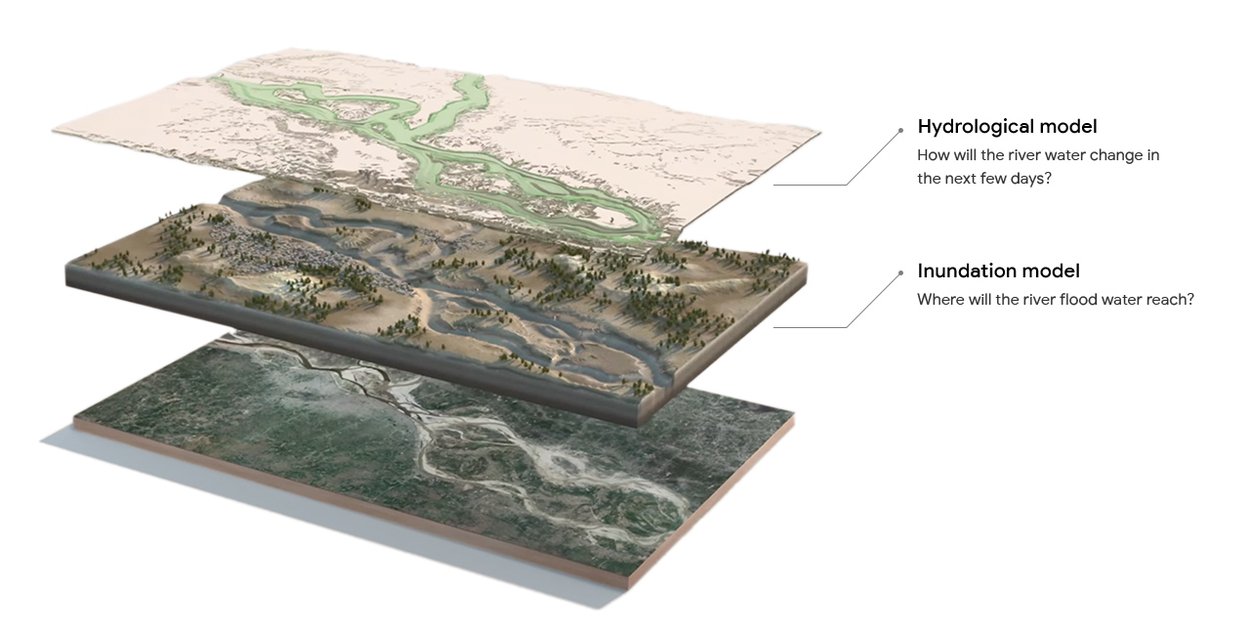
Engineers have further developed deep neural network models that outperform traditional simulations in certain conditions, accurately predicting coastal water levels even in regions with limited historical data or under unprecedented climate scenarios. With hurricanes and storm surges causing over $1.5 trillion in damages since 1980, these innovations could dramatically improve resilience for coastal populations worldwide.
As global climate threats intensify, AI-driven forecasting stands poised to redefine how nations anticipate and respond to natural disasters. With AI models now operating six times faster and more accurately than legacy systems, scientists and policymakers alike see this as a turning point—where digital intelligence may finally outpace the rising tide.

Your First 10 AI Skills
10 practical AI skills, copy-paste prompts and a 7-day plan to start using AI with confidence.
Download the guide →