

The secret to life on Earth might be hidden deeper than previously thought. In a groundbreaking study published in the journal Nature Geoscience, scientists have discovered that metal nodules on the Pacific Ocean floor are producing oxygen in complete darkness, without any assistance from living organisms. This unexpected finding could revolutionize our understanding of the origins of life.
“I think we need to revisit questions like: where could aerobic life (life that requires oxygen) have begun?” said Andrew Sweetman, the study’s lead author and professor of seafloor ecology at the Scottish Association for Marine Science (SAMS) in Oban, UK.
Sweetman and his team stumbled upon this phenomenon, dubbed “dark oxygen,” while sampling the seabed over 13,000 feet down in a 1.7 million square mile area located between Mexico and Hawaii. Their initial goal was to assess the environmental impacts of mining metal nodules, which contain cobalt, nickel, and rare earth metals such as cerium. However, during their research, the sensors detected unexpected oxygen emissions from the seabed.
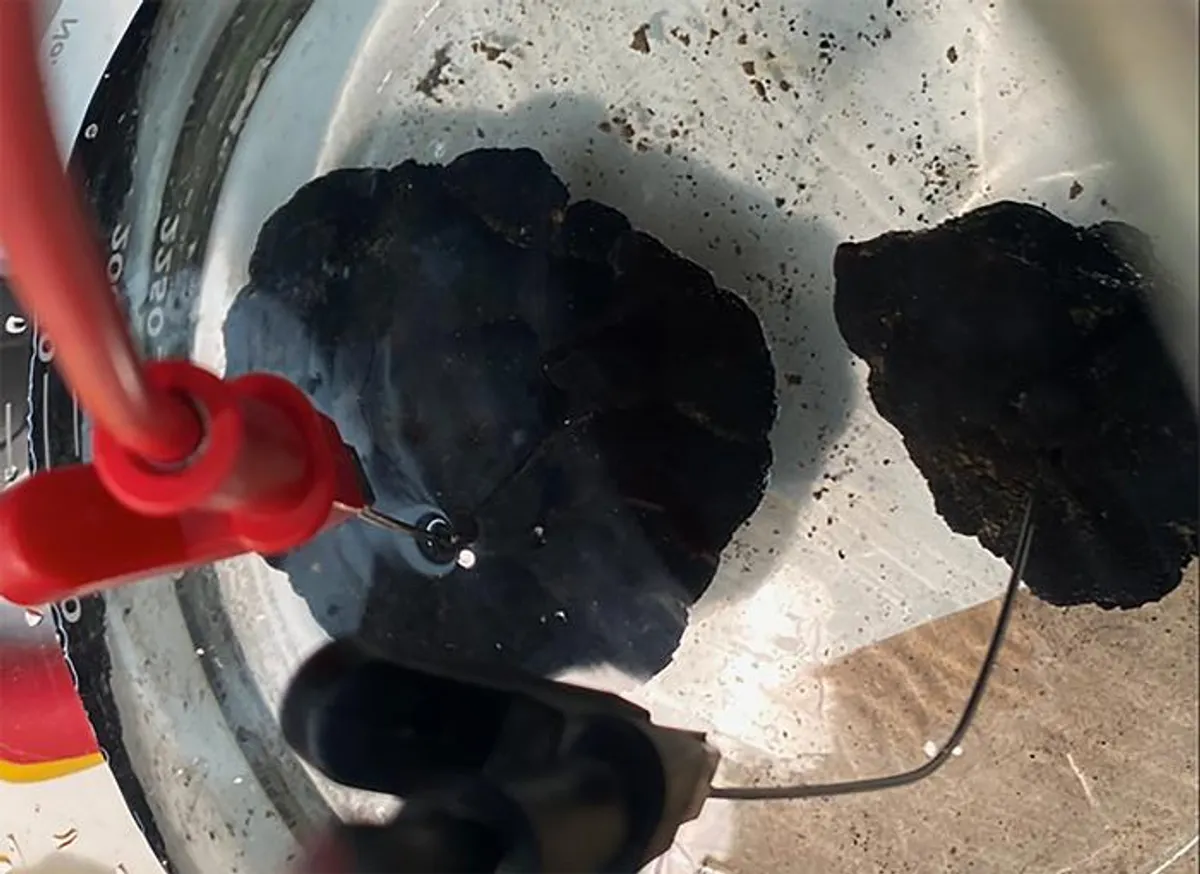
Image credit: Franz Geiger/Northwestern University
Given the depth of the ocean floor, where sunlight cannot penetrate and photosynthesis is impossible, these oxygen emissions seemed impossible. This marked the first time scientists had observed oxygen being generated without the involvement of living organisms. Sweetman was so taken aback by the discovery that he initially suspected faulty sensors. After sending the equipment back to the manufacturer for testing, it was confirmed to be functioning correctly. Subsequent experiments revealed that the metallic nodules create “dark oxygen” through a process called seawater electrolysis.
Seawater electrolysis occurs when seawater is split into oxygen and hydrogen in the presence of an electric charge. In this case, the highly charged metal nodules act like an aquatic battery, providing the necessary electric charge. “Only a voltage of 1.5 V is needed for seawater electrolysis to occur – the same voltage as a typical AA battery,” the study authors explained. The team recorded readings of up to 0.95 volts on the surfaces of some nodules, suggesting significant voltages when these nodules are clustered together.
In essence, nature is so metal.
This discovery prompts a re-evaluation of how life on Earth began approximately 3.7 billion years ago. Traditionally, it has been believed that oxygen-producing photosynthesis was the primary source of oxygen, leading to the rise of aerobic life forms. However, the existence of dark oxygen suggests that oxygen could have been produced through abiotic processes long before photosynthetic organisms appeared.
“This is a profound discovery that challenges our fundamental understanding of the processes that may have led to the development of aerobic life on Earth,” Sweetman stated. This finding opens new avenues for exploring the origins of life and suggests that similar processes might occur in other parts of the universe, potentially on planets and moons with no sunlight but rich in minerals and metals.
The revelation of dark oxygen also underscores the incredible complexity and versatility of natural processes, highlighting that life can thrive in conditions previously thought to be uninhabitable. As scientists continue to explore these deep-sea environments, they may uncover more secrets that could reshape our understanding of biology, chemistry, and the history of life on Earth.