

Google is exploring the integration of electricity sourced from nuclear power plants to support the immense energy requirements of its expanding artificial intelligence (AI) projects, CEO Sundar Pichai revealed during an interview with Nikkei in Tokyo. This strategic move is part of Google’s broader initiative to enhance its sustainability efforts while accommodating the growing demands of its generative AI technologies.
Pichai emphasized that Google’s consideration of nuclear energy is likely to reinvigorate the development of carbon-free power sources. In addition to nuclear power, Google plans to increase investments in renewable energy sectors such as solar and thermal power to diversify its energy portfolio and further reduce its carbon footprint.
The tech giant has been significantly ramping up its investments in data centers to support its advanced AI initiatives. Alphabet, Google’s parent company, reported a substantial increase in capital expenditure during the April-June quarter, rising approximately 90% from the previous year to reach $13.1 billion on a cash-flow basis. This surge in investment underscores Google’s commitment to maintaining its leadership in the AI domain.
“For the first time in our history, we have this one piece of underlying technology which cuts across everything we do today,” Pichai stated regarding generative AI. “I think the opportunity to do well here is something we are leaning into.” This focus on AI reflects Google’s strategic prioritization of technologies that drive innovation and user experience across its vast array of services.
Addressing criticisms that Big Tech companies like Google are overinvesting in AI, Pichai responded, “Anytime there is a big platform shift, you invest more disproportionately at the earlier stages, and then you drive efficiency down the line.” He highlighted that such investments are essential for pioneering new technologies and maintaining competitive advantage in a rapidly evolving market.
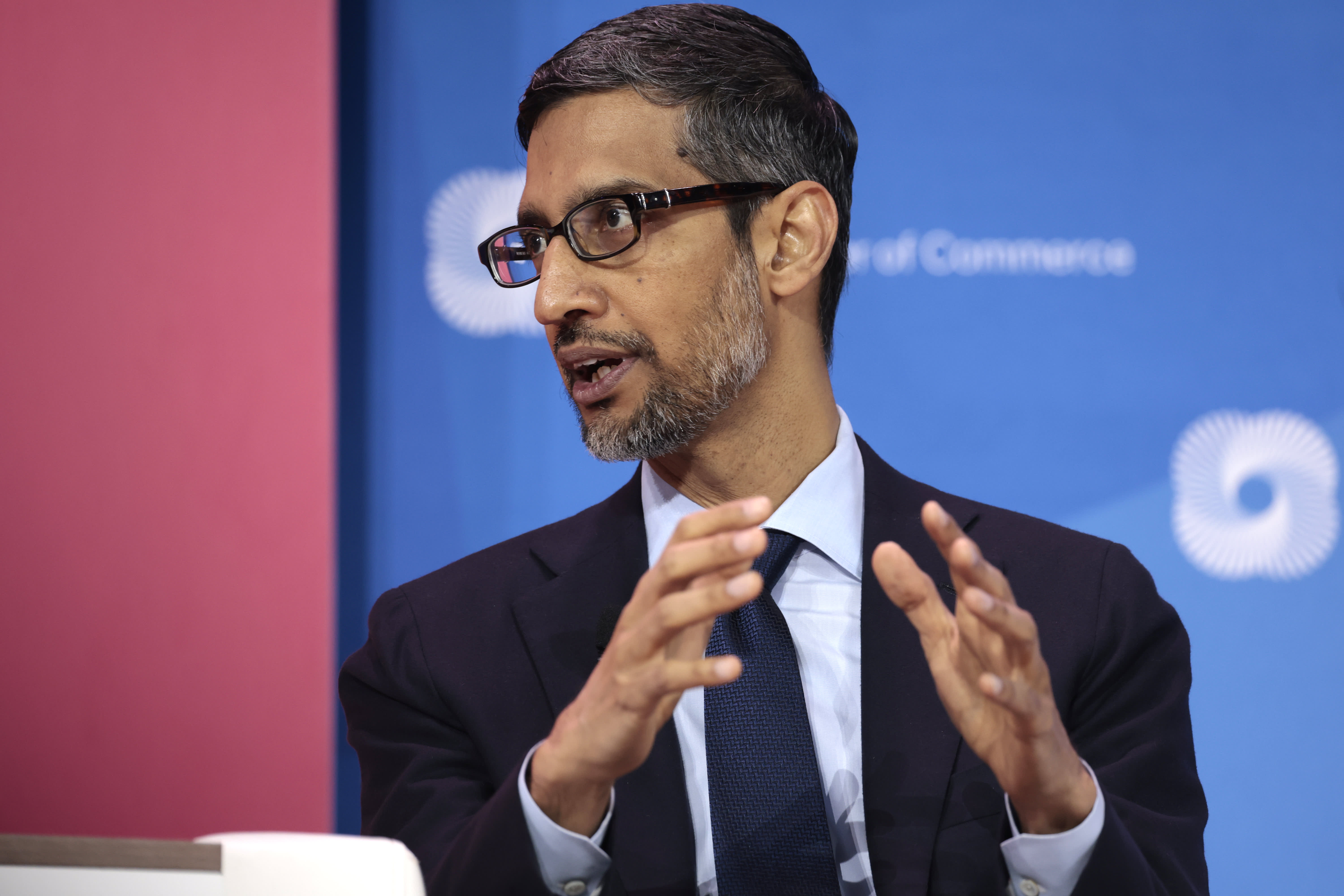
Anna Moneymaker | Getty Images
Google aims to achieve net-zero emissions across all its operations and value chain by 2030. However, the company’s total greenhouse gas emissions in 2023 were reported to be 48% higher than in 2019, primarily due to the substantial energy consumption associated with generative AI. This presents a significant challenge as Google strives to secure sustainable power sources while mitigating its environmental impact.
“Increasing our investments in renewable energy sources like solar and thermal power is a crucial part of our strategy,” Pichai explained. “We are now looking at additional investments, be it solar, and evaluating technologies like small modular nuclear reactors, etc.” Although specific details about the locations and timelines for sourcing nuclear-generated electricity remain undisclosed, it is anticipated that some of these efforts will be concentrated in the United States, where both Google and its cloud computing competitor Amazon.com are headquartered.
In March, Amazon announced its decision to source electricity from nuclear power plants, and in September, Microsoft revealed plans to procure energy from the Three Mile Island plant in Pennsylvania, despite its infamous partial meltdown in 1979. These moves by major tech companies reflect a broader industry trend towards diversifying energy sources to meet escalating demands while adhering to sustainability goals.
Google’s commitment to sustainability is further exemplified by its substantial investment in Japan, where the company pledged to invest 100 billion yen ($680 million) by 2024 in data centers and other operations. Pichai highlighted potential business opportunities in AI-powered robotics tailored for Japan’s aging population, indicating plans for further investments in renewable energy-powered data centers.
Amidst these developments, global concerns over the oligopoly power of Big Tech persist. Pichai acknowledged the scrutiny faced by large-scale companies, stating, “I think it’s natural that companies which have a scale will have scrutiny. I view it as our responsibility to engage constructively and respectfully and find common frameworks or solutions.” This comes in the wake of regulatory actions, including the Japan Fair Trade Commission’s recent investigation into the generative AI market and a U.S. district court ruling against Google in an antitrust case concerning its search engine dominance.
Pichai concluded by reaffirming Google’s dedication to innovation and improving user and customer experiences despite regulatory challenges. “There will be cases where we disagree and we care about innovation and being able to improve our user and customer experience and so where we feel that we are not able to do that, we will defend ourselves,” he stated.
As Google navigates the complexities of scaling its AI capabilities while striving for sustainability and regulatory compliance, the company’s strategic investments in nuclear and renewable energy sources will be pivotal in addressing both its operational needs and environmental responsibilities.

Your First 10 AI Skills
10 practical AI skills, copy-paste prompts and a 7-day plan to start using AI with confidence.
Download the guide →