

NASA has awarded SpaceX up to $843 million to develop a vehicle designed to safely deorbit the International Space Station (ISS) as it approaches the end of its operational life. This crucial project aims to guide the ISS to its final resting place, ensuring a controlled reentry into Earth’s atmosphere. The SpaceX-built deorbit vehicle is expected to launch later this decade and will play a vital role in the safe decommissioning of the nearly 1 million-pound orbiting laboratory, which is approximately the size of a football field.
The ISS, a collaborative effort involving NASA, Roscosmos (the Russian space agency), JAXA (Japan Aerospace Exploration Agency), ESA (European Space Agency), and CSA (Canadian Space Agency), has been in continuous operation since 2000. The station orbits about 250 miles (400 kilometers) above Earth and serves as a crucial platform for scientific research and experiments that support future deep space missions.
NASA’s decision to select SpaceX for this task underscores the agency’s commitment to ensuring a responsible and safe transition in low Earth orbit. “Selecting a U.S. Deorbit Vehicle for the International Space Station will help NASA and its international partners ensure a safe and responsible transition in low Earth orbit at the end of station operations,” said Ken Bowersox, associate administrator for NASA’s Space Operations Mission Directorate.
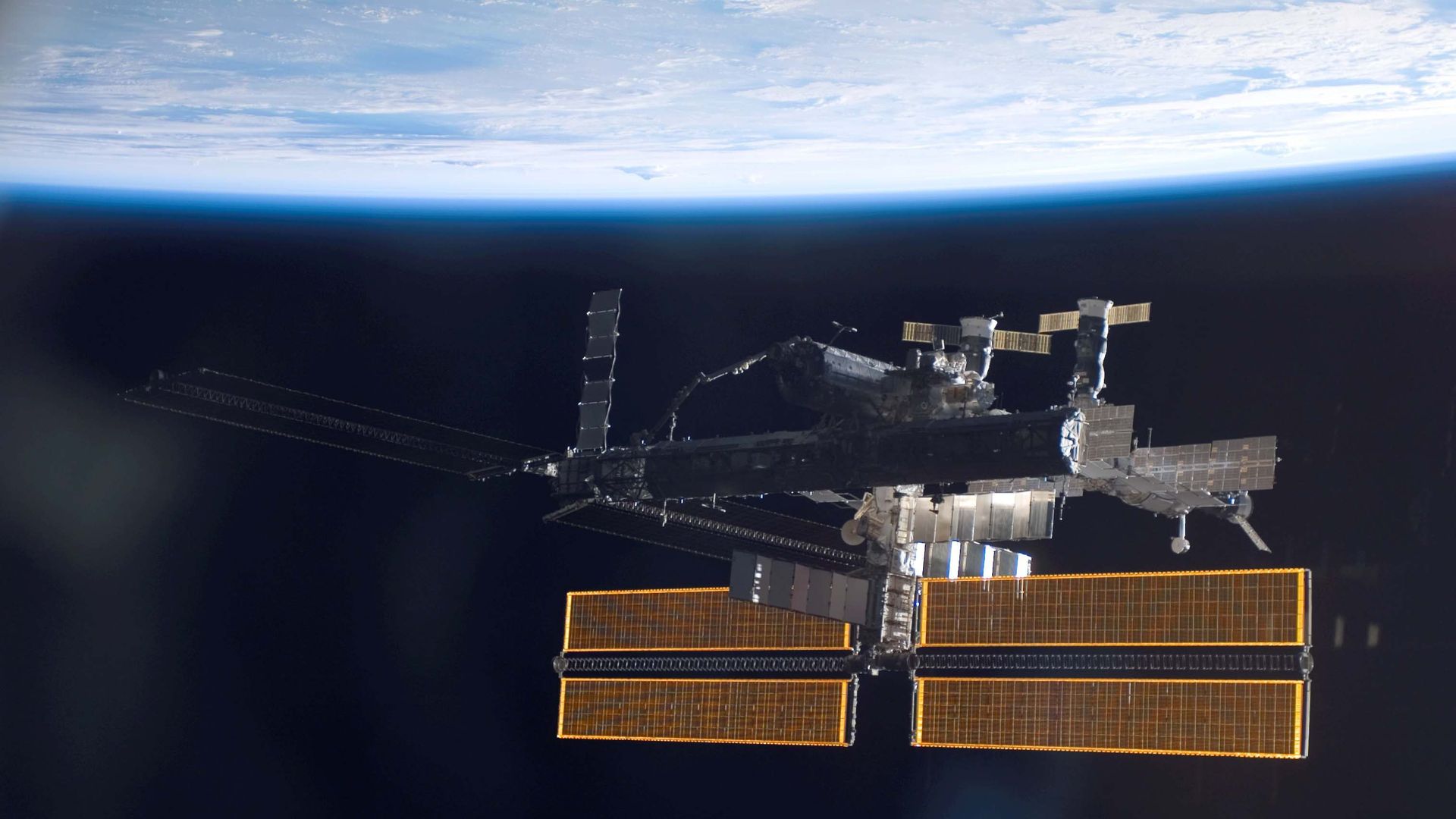
The deorbit vehicle will attach to the ISS and guide it through a controlled descent, ensuring it reenters the Earth’s atmosphere at a precise trajectory. Traveling at speeds over 17,000 miles per hour (27,359 kilometers per hour), the space station will burn up upon reentry. This method aims to minimize the risk of debris reaching the Earth’s surface.
The exact timeline for the ISS’s retirement remains uncertain. NASA has committed to maintaining station operations through 2030, but Roscosmos has only guaranteed its participation until at least 2028. The deorbit vehicle is expected to be ready by 2029, with a potential launch as early as December 2028.
This initiative is part of NASA’s broader strategy to transition low Earth orbit operations to the private sector. The agency plans to focus on deeper space exploration, including the Artemis program, which aims to return astronauts to the Moon by 2026 and establish a permanent lunar outpost. As NASA transitions away from managing the ISS, commercial companies will have the opportunity to develop their own orbiting laboratories, space hotels, and other ventures in low Earth orbit.
In addition to the deorbit vehicle contract, NASA announced the termination of a contract with Collins Aerospace for developing new Extravehicular Activity (EVA) spacesuits. These suits, crucial for spacewalks, have been in use for over 40 years. The decision came after Collins Aerospace acknowledged that its development timeline could not support the space station’s schedule and NASA’s mission objectives.
This announcement comes on the heels of a recent incident where astronaut Tracy Dyson’s spacesuit sprung a leak, causing NASA to cancel a planned spacewalk to repair a faulty electronics box on the ISS. The need for updated spacesuits remains critical as NASA continues to prepare for future missions beyond low Earth orbit.
Overall, the collaboration with SpaceX to develop the ISS deorbit vehicle represents a significant step towards ensuring the safe decommissioning of the ISS while paving the way for future space exploration endeavors. As NASA focuses on deeper space missions, the commercial sector’s role in low Earth orbit will expand, fostering innovation and new opportunities in space.