

NASA has uncovered one of spaceflight’s most unexpected and potentially lasting side effects: significant vision changes in astronauts who spend months in microgravity. Known as Spaceflight Associated Neuro-ocular Syndrome (SANS), the condition is now one of the top health concerns for long-duration missions—impacting everything from day-to-day function aboard the ISS to future Mars exploration.
Dr. Sarah Johnson, a NASA astronaut, first noticed the problem during her six-month mission on the International Space Station. Clear text suddenly appeared blurry. And she wasn’t alone. About 70% of astronauts who spend extended time in space have reported issues like blurred distance vision, difficulty reading, and other visual impairments. Unlike temporary side effects like motion sickness or muscle atrophy, these eye changes can persist for years or even become permanent.
NASA believes the root cause is microgravity’s impact on fluid distribution in the body. On Earth, gravity helps pull bodily fluids downward. But in space, fluids shift upward, causing puffiness in the face and increased pressure inside the skull. That internal pressure can flatten the eyeball and swell the optic nerve, leading to long-term eye damage.
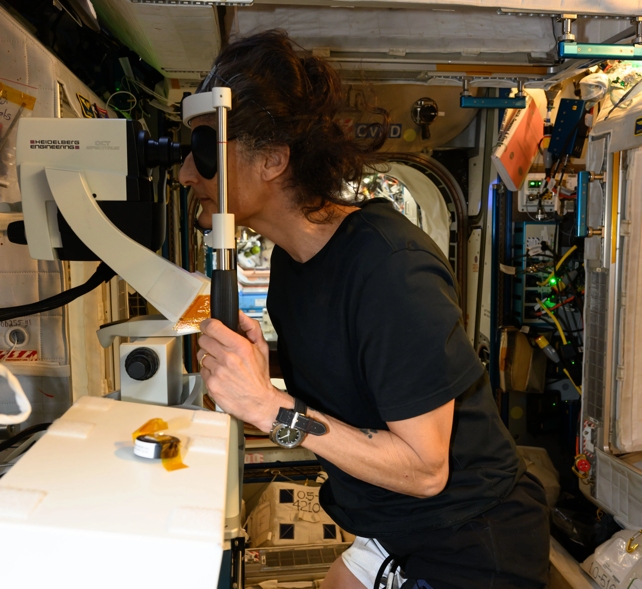
As NASA gears up for future missions to Mars—trips that could last two to three years—this issue becomes even more critical. SANS doesn’t just affect comfort; it could jeopardize astronauts’ ability to operate spacecraft, read instruments, and safely navigate mission objectives.
To combat the risks, NASA teams are working on multiple countermeasures. These include special contact lenses, medications to reduce cranial fluid pressure, and exercise protocols designed to promote better circulation. Another promising tool is the Visual Impairment Intracranial Pressure (VIIP) chamber, a device that simulates Earth-like pressure around the eyes to potentially prevent vision degradation in space.
While this may sound alarming, the research has implications far beyond the space program. NASA’s work on SANS is also offering insights into eye conditions on Earth, including glaucoma and intracranial hypertension. By studying how pressure and fluid dynamics affect vision in space, scientists hope to develop new treatments for people suffering from similar issues here at home.
As space agencies push the boundaries of exploration, they’re discovering just how complex—and fragile—the human body really is when removed from Earth’s gravitational pull. Vision, one of our most vital senses, is clearly vulnerable in orbit. But thanks to ongoing research aboard the ISS and innovations here on Earth, NASA is determined to find a solution.
Because when humanity finally steps onto Mars, we’ll want to see clearly just how far we’ve come.