

On Monday, July 29, the Expedition 71 crew aboard the International Space Station (ISS) focused on preparations for an upcoming U.S. cargo mission, spacesuit maintenance, and a variety of scientific tasks. The crew members also practiced for the robotic capture of the Cygnus cargo spacecraft and engaged in regular maintenance and research activities.
The next cargo mission to resupply the ISS is scheduled to launch at 11:28 a.m. EDT on Saturday from Kennedy Space Center in Florida. Northrop Grumman’s Cygnus space freighter, launching atop a SpaceX Falcon 9 rocket, will carry 8,200 pounds of science, supplies, and hardware for the station. Cygnus will orbit Earth for just over a day and a half before approaching the orbital outpost, where the Canadarm2 robotic arm will capture the spacecraft.
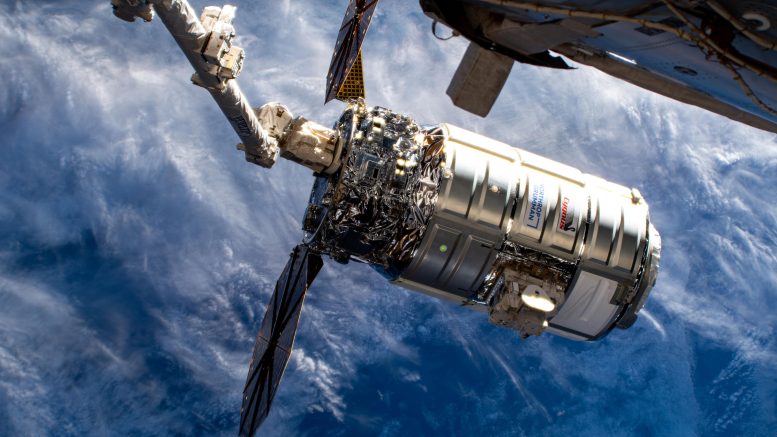
NASA Flight Engineers Matthew Dominick and Jeanette Epps spent Monday preparing for Cygnus’ arrival by reviewing its mission profile and practicing robotic capture maneuvers on a computer. Dominick will command the Canadarm2 to capture Cygnus at 5 a.m. on August 5, while Epps will back him up and monitor the approach and rendezvous activities. After the capture, robotics controllers on the ground will guide Cygnus toward the Unity module’s Earth-facing port, where it will be mated for five and a half months.
NASA Flight Engineer Mike Barratt began his day by checking plumbing hardware stowed in the Zarya module before swapping components and configuring a U.S. spacesuit in the Quest airlock. NASA astronaut Tracy C. Dyson spent her morning in the Columbus laboratory module troubleshooting the MARES rack (Muscle Atrophy Research and Exercise System) and her afternoon installing drawer handle brackets on a pair of Human Research Facility racks.
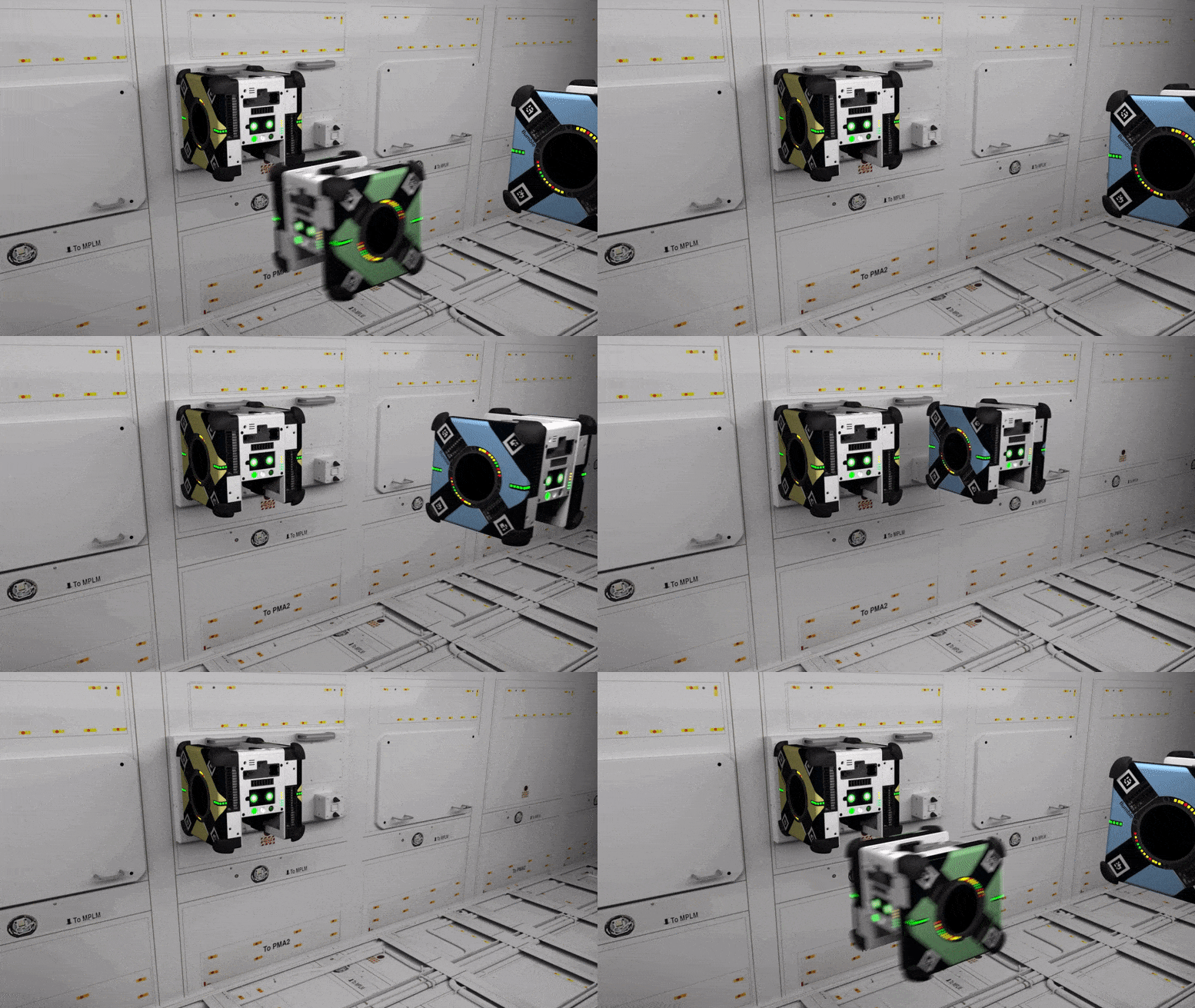
Starliner Commander Butch Wilmore and Pilot Suni Williams entered their spacecraft Monday afternoon to check its water systems, call down to Boeing mission personnel for a conference, and wear their flight suits momentarily for a pressure test. Wilmore started his morning in the station’s Harmony module assembling the BioServe centrifuge, while Williams reviewed procedures for operating the Astrobee free-flying robotic assistants.
The three cosmonauts aboard the ISS, Flight Engineers Nikolai Chub and Alexander Grebenkin, along with station Commander Oleg Kononenko, refocused their activities on standard space research and lab maintenance duties after a week of inspection tasks in the Roscosmos segment. Nikolai Chub worked on science tasks, studying a 3D printer’s ability to manufacture tools in microgravity, exploring how magnetic and electrical fields affect fluid physics, and installing hardware to image Earth’s nighttime atmosphere in near-ultraviolet wavelengths. Alexander Grebenkin attached sensors to himself during the morning for a 24-hour session measuring his heart rate and blood pressure. Later, he pointed a camera outside a station window to take pictures for a pair of Earth observation studies. Oleg Kononenko installed radiation detection hardware cables and inventoried food rations at the beginning of his shift.