

Key Takeaways
- LZ analyzed 417 days of data collected between March 2023 and April 2025.
- No dark matter (WIMP) signals were detected in the 3–9 GeV/c² mass range.
- The detector recorded a 4.5 sigma detection of boron-8 solar neutrinos, the strongest yet.
- LZ is now over 3 million times more sensitive than early dark matter detectors.
- This is the first time LZ has searched for WIMPs below 9 GeV/c², setting top global limits above 5 GeV/c².
- The neutrino detection uses coherent elastic neutrino-nucleus scattering (CEvNS), a rare process observed only since 2017.
- LZ will continue collecting data through 2028, aiming for 1,000+ days of exposure.
The world’s most sensitive dark matter experiment has pushed the boundaries of particle physics once again. On Monday, researchers from the LUX-ZEPLIN (LZ) collaboration revealed new results from 417 days of continuous operation at the Sanford Underground Research Facility in South Dakota, nearly one mile below the surface.
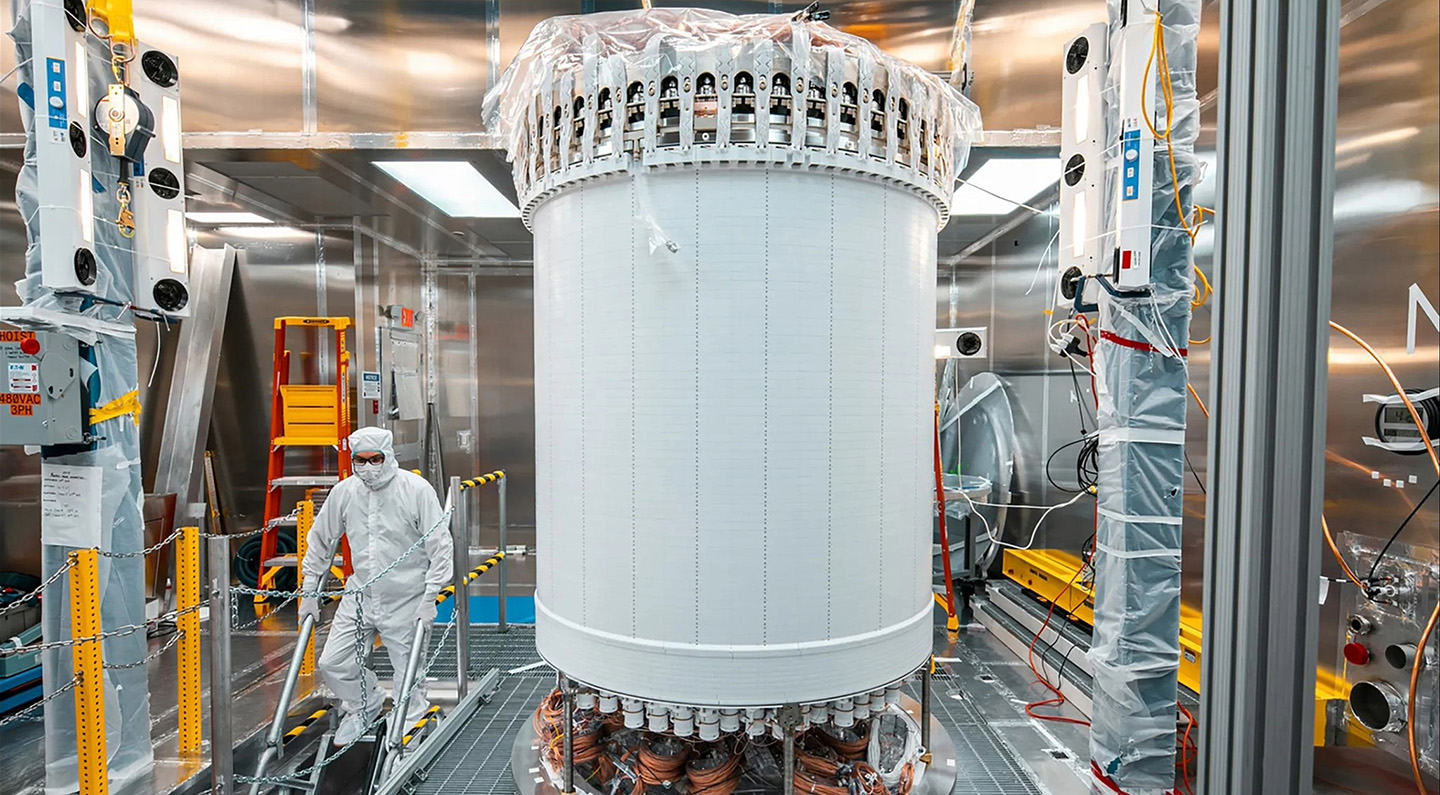
Although the experiment did not detect any signs of weakly interacting massive particles (WIMPs) within the 3 to 9 GeV/c² mass window, the team reported something equally extraordinary: a high-confidence detection of solar neutrinos, marking a major scientific milestone.
The data show a 4.5 sigma signal of boron-8 solar neutrinos interacting with xenon nuclei, far surpassing previous results from PandaX-4T and XENONnT, which reached only 2.6–2.7 sigma. This achievement marks LZ’s entry into the “neutrino fog”, the region where the faint hum of solar neutrinos becomes strong enough to interfere with potential low-mass dark matter signals.
Researchers describe this era as both a challenge and an opportunity. While the presence of neutrino backgrounds complicates dark matter searches, it also allows detectors like LZ to probe solar physics and test the Standard Model through coherent elastic neutrino-nucleus scattering (CEvNS). This rare interaction, first observed only seven years ago, occurs when a neutrino hits an entire atomic nucleus, creating subtle signals that LZ is now sensitive enough to measure.
The LZ detector uses 10 tonnes of ultrapure liquid xenon to capture fleeting particle interactions, making it one of the cleanest and most sensitive detectors ever built. According to spokesperson Rick Gaitskell from Brown University, the latest run has further “increased the incredible sensitivity” of the system, which is now more than 3 million times more sensitive than early dark matter detectors.
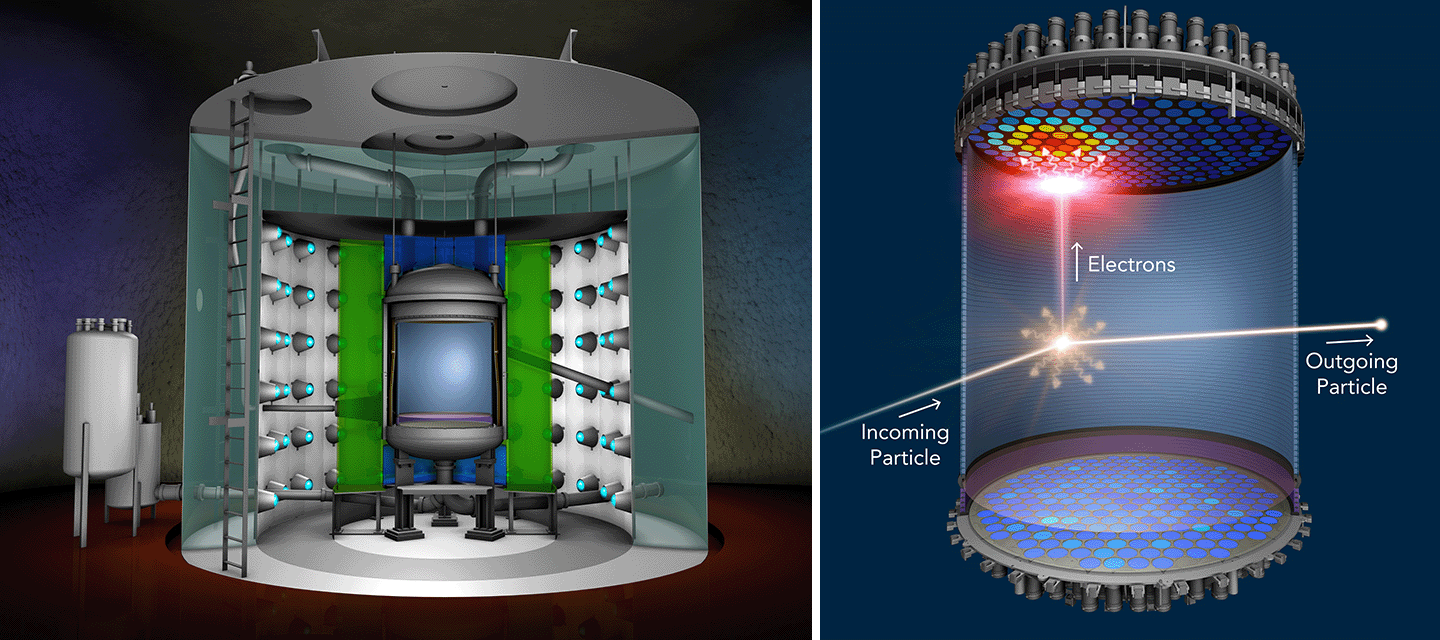
Despite the continued absence of WIMP signatures, the experiment set world-leading constraints on dark matter above 5 GeV/c² and conducted its first search below 9 GeV/c². These results help narrow the window for potential dark matter candidates and guide future research directions.
LZ is scheduled to run through 2028, ultimately collecting more than 1,000 days of data and more than doubling its current exposure. With each new dataset, researchers hope to inch closer to understanding both the nature of dark matter and the inner workings of our Sun.
The collaboration presented its findings at the Sanford Underground Research Facility, with plans to submit the full results to Physical Review Letters.